Personalized Medical Care & Dedicated International Patient Concierge


No-Implant Rhinoplasty · Needs Clinic Confirmation
Implant-Free Rhinoplasty
Implant-Free Rhinoplasty (also called No-Implant) raises the nasal bridge and shapes the tip using zero synthetic implants — no silicone, no Gore-Tex.
Schedule a ConsultationWhat Is Implant-Free Rhinoplasty?  Implant-Free Rhinoplasty (also called No-Implant rhinoplasty) raises the nasal bridge and shapes the tip using zero synthetic implants — no silicone, no Gore-Tex. Instead, autologous or donated dermis and cartilage are used to naturally build up the bridge, avoiding the side effects associated with synthetic material and producing a result intended to look and feel like the patient's original nose. This isn't a niche preference: among GNG Hospital's actual surgical patients, roughly 43% choose no-implant rhinoplasty versus 57% choosing implant-based approaches — a genuinely close split, with no-implant interest increasing recently as more patients prioritize a more natural line over a purely synthetic solution. * * * ## Who Is a Good Candidate for Implant-Free Rhinoplasty? Implant-Free Rhinoplasty is suited to patients who prioritize natural tissue integration over synthetic material: - Adults in their 20s through 50s wanting a completely undetectable, natural-looking nose line
- Patients who are averse to synthetic implants like silicone or Gore-Tex for personal or safety reasons
- Individuals needing revision surgery due to inflammation or capsular contracture from a prior synthetic implant
- Patients correcting a crooked nose or hooked/hump nose who specifically want a natural line rather than an implant-based result
- Those concerned about implant show-through, particularly patients with thin nasal tip skin
- Patients who want material that won't show clearly on X-ray or CT scans or airport security scanners
- Individuals researching long-term outcomes and wanting to avoid bridge warping, hardening, or a "chalk-nose" telltale post-surgical look
- Patients who prefer their own tissue integrating with the body rather than a permanent foreign object * * * ## Meet the Specialists Behind GNG Hospital's Implant-Free Rhinoplasty |
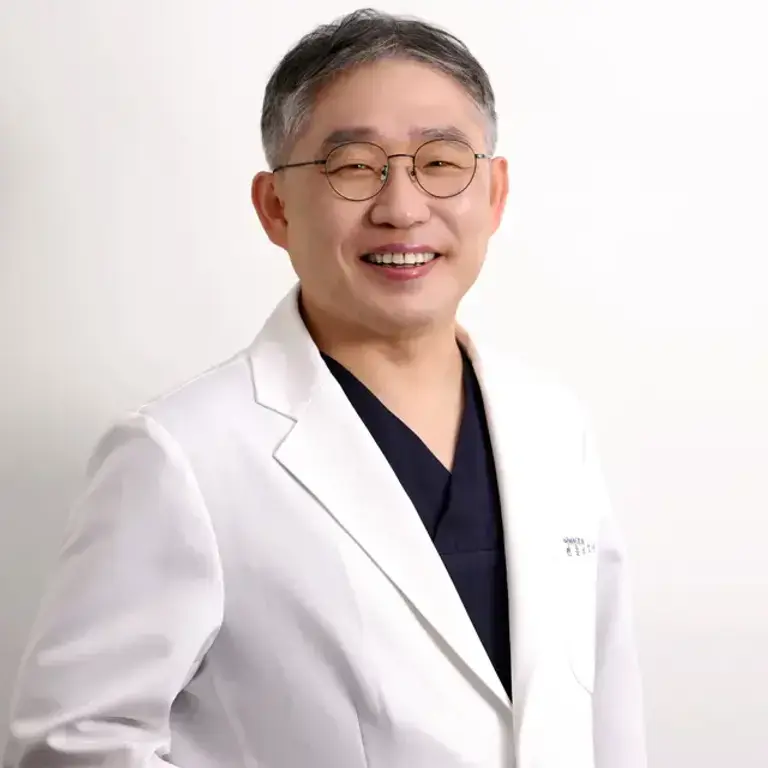 |
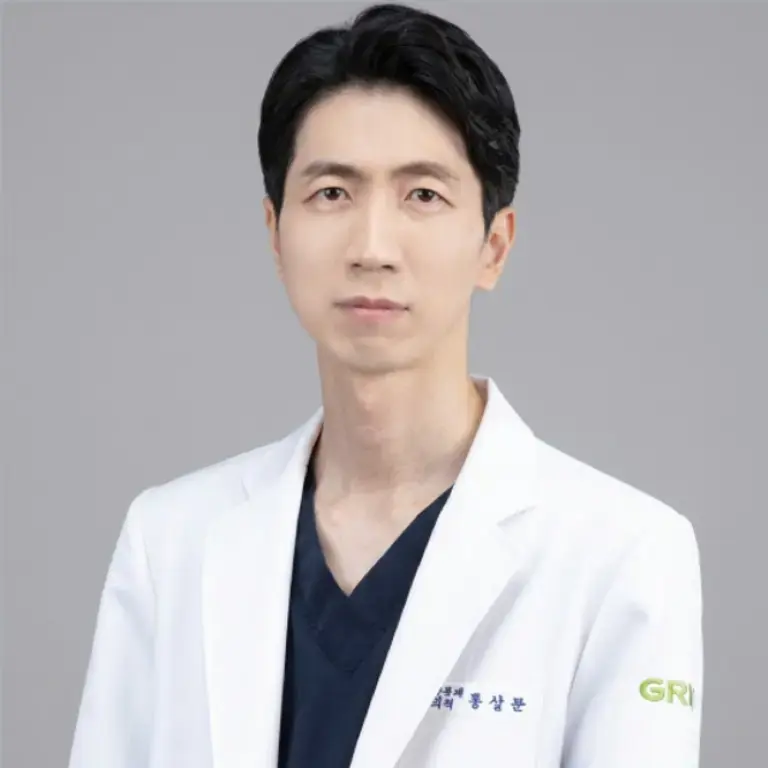 |
 |
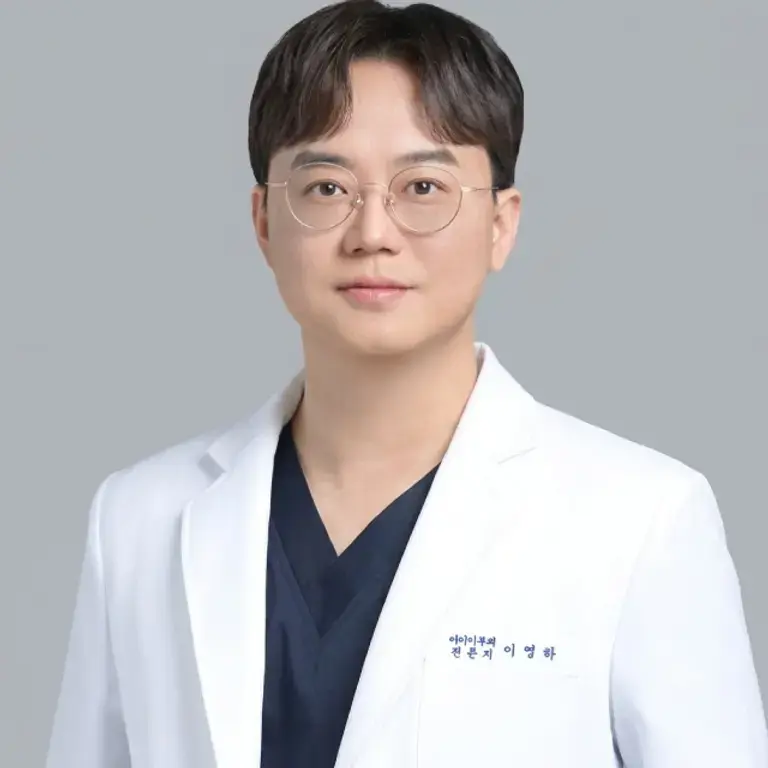 |
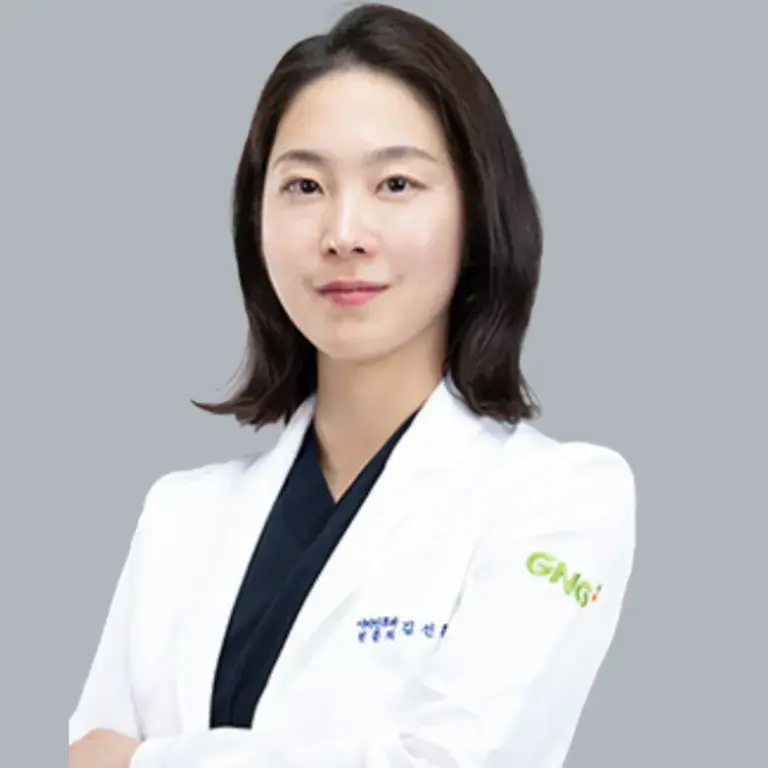 |
| --- | --- | --- | --- | --- |
| Dr. Yong-Hae Seong Director of the Rhinoplasty Clinic | Dr. Sung-Moon Hong ENT Doctor | Dr. Sung-Hun Lee ENT Doctor | Dr. Young-Ha Lee Board-certified ENT specialist | Dr. Sun-Hong Kim ENT Doctor |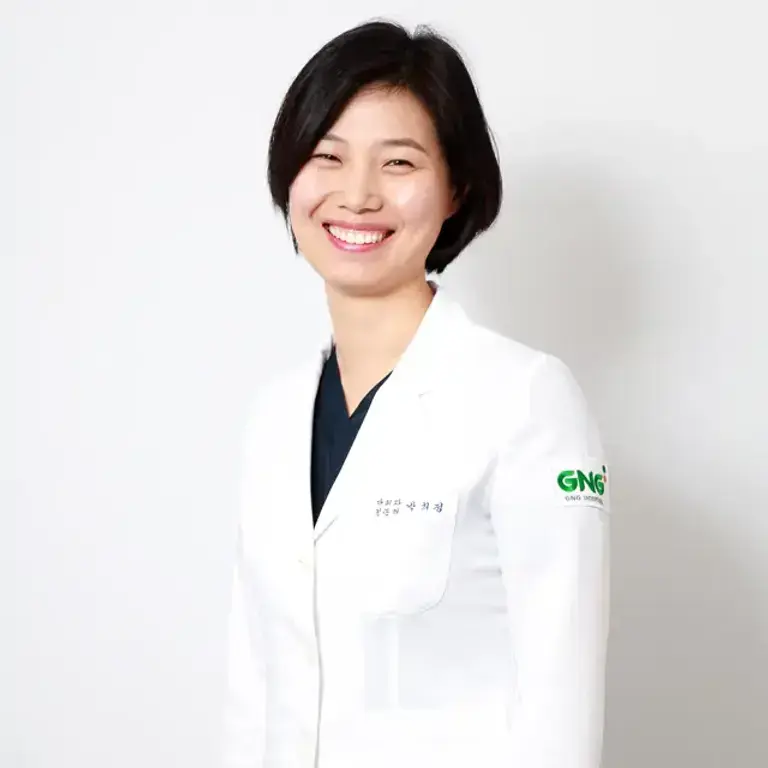 Dr. Hee-Jung Park Anesthesiology Specialist GNG Hospital's Implant-Free Rhinoplasty is performed by a team whose technical mastery of the demanding cartilage-crushing technique supports this natural-tissue approach: - Dr. Yong-Hae Seong, Director of the Rhinoplasty Clinic, brings over 26 years of ENT practice and a background as a former Associate Professor at the Catholic University of Korea, trained at Gangnam St. Mary's Hospital.
- Dr. Sung-Moon Hong contributes more than 21 years of ENT experience, holding a Doctor of Medicine from Korea University and a former Associate Professorship there.
- Dr. Sung-Hun Lee, with over 20 years in ENT, completed dedicated rhinologist training at Seoul St. Mary's Hospital under the Catholic University of Korea system.
- Dr. Young-Ha Lee is a board-certified ENT specialist and lifetime member of the Korean Society of Facial Plastic & Reconstructive Surgery, trained at Asan Medical Center and Wonju Severance Christian Hospital.
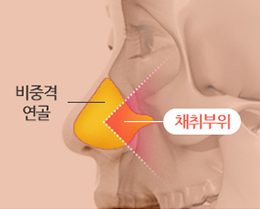
- Dr. Sun-Hong Kim serves as a Clinical Professor across Catholic University of Korea and Seoul St. Mary's Hospital, with expertise spanning rhinoplasty, sleep surgery, and laser treatments. Supporting the surgical team, Dr. Hee-Jung Park, an Anesthesiology Specialist with 21+ years of experience, ensures patient safety and comfort throughout the procedure. This team shares a common surgical philosophy: cartilage-crushing is an internationally validated but technically demanding technique that requires extensive experience to perform well — the difference between a natural, stable result and a poorly retained one comes down to surgeon skill. * * * ## Implant-Free Rhinoplasty Treatment Areas and Expected Improvements GNG Hospital's Implant-Free Rhinoplasty draws on four autologous graft sources, plus a donor-tissue option when needed: - Septal Cartilage: Harvested from inside the nose with appropriate thickness and strength for shaping both bridge and tip.
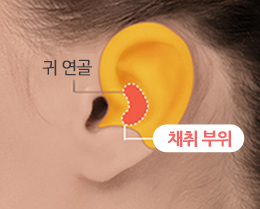
 - Ear Cartilage: Soft and easy to harvest, well-suited to creating a natural bridge and tip shape.
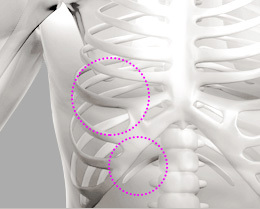
 - Rib Cartilage: Firm and sturdy, providing stronger structural support when a more robust foundation is needed to erect the nose.
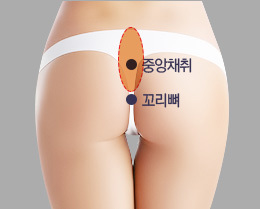
 - Hip-Area Dermis: Harvested from the body's thickest skin area, designed and shaped to match facial balance for bridge contouring.
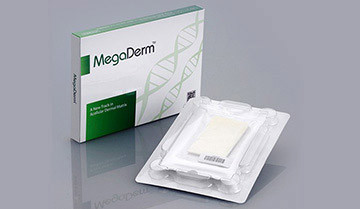
 - Donor Dermis/Cartilage (When Autologous Harvest Isn't Feasible): FDA-approved and Korea MFDS-approved donor tissue, closely resembling real skin, processed to eliminate rejection response, and clinically validated for decades in burn patients and male aesthetic procedures.
 A defining aspect of GNG's approach is how this cartilage is used: rather than inserting it as a solid piece, cartilage is finely crushed into powder form. This addresses a historical problem — dermis-only grafts had absorption-related revision rates of 15–20% due to uneven absorption over time, sometimes producing a bumpy, saddle-nose-like irregular line. GNG's crushed-cartilage-powder technique reduces this absorption-related revision rate to under 1%. Expected improvements generally include a naturally raised, well-shaped bridge and tip with skin-like texture. As with any surgical procedure, results and recovery vary by individual, and no specific outcome is guaranteed. * * * ## Implant-Free Rhinoplasty Process and Timeline GNG Hospital follows a materials-first, technique-driven process for implant-free rhinoplasty: 1. Consultation and Tissue Source Planning: The surgical team determines the most appropriate autologous graft source (septal, ear, or rib cartilage, or hip-area dermis) based on the patient's anatomy and goals, or plans for donor tissue if autologous harvest isn't feasible.
- Tissue Harvesting: The selected cartilage or dermis is harvested from the chosen donor site.
- Cartilage Crushing: Harvested cartilage is finely crushed into powder form — a time-consuming, technically demanding process requiring specific experience and know-how, rather than being inserted as a whole solid piece.
- Bridge and Tip Shaping: The crushed cartilage powder is combined and shaped to create an ideal bridge and tip line customized to the individual patient's facial proportions.
- Immediate Aftercare: Patients receive guidance on swelling management and activity restrictions during the initial recovery period.
- Follow-Up: Follow-up visits monitor how the graft material engrafts and settles, tracking bridge shape and stability as swelling resolves over subsequent weeks. * * * ## Results, Safety, and Longevity of Implant-Free Rhinoplasty The central safety and durability advantage of GNG's approach lies in the crushed-cartilage-powder technique. Inserting cartilage as a solid, whole piece carries specific long-term risks: the bridge can warp over time, harden, and after 1–2 years, develop a "chalk-nose" telltale post-surgical look as the surrounding capsule dissolves and the solid cartilage becomes visibly outlined under the skin. Crushing the cartilage into powder form prevents bridge warping and hardening, allows customized shaping per patient, and avoids this chalk-nose appearance entirely, since there's no solid piece to become visible when the capsule dissolves. Once engrafted, the material doesn't show on X-ray or CT imaging and doesn't feel like an implant to the touch — it feels soft and natural. Because it integrates with the body's own tissue, this approach works even with thin tip skin, carries near-zero rejection reaction since no foreign implant is used, and results in minimal nasal deformity risk since the body recognizes the material as its own tissue. The combination of cartilage and dermis covering the underlying bone can also make the nose more impact-resistant than before surgery. As with any surgical procedure, possible side effects can include swelling, bruising, infection, or asymmetry, and results and recovery vary from patient to patient; serious complications are uncommon but possible. Height retention has also improved significantly compared to older dermis-only methods — GNG's technique achieves height comparable to synthetic implants while dramatically reducing height loss over time. * * * ## Why Choose GNG Hospital for Implant-Free Rhinoplasty?
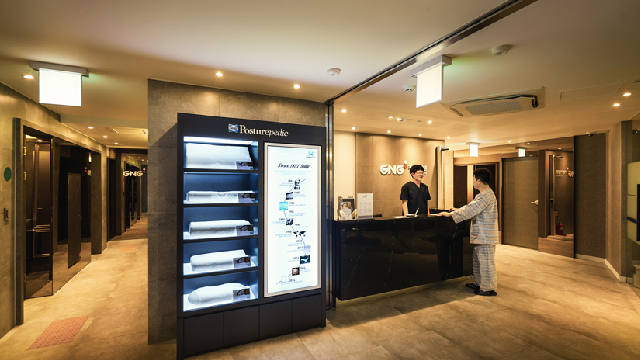 GNG Hospital is Korea's most dedicated rhinoplasty-only hospital, built on more than 15 years of singular focus on nasal medicine, with a surgical team composed primarily of board-certified ENT specialists rather than general plastic surgeons. According to 2024 HIRA (Health Insurance Review and Assessment Service) national data, GNG Hospital performed more septoplasty procedures than any other hospital-level medical institution in the country, reflecting broad structural surgical experience across the full range of rhinoplasty techniques. What sets GNG apart specifically in implant-free rhinoplasty is both scale and innovation. The hospital has performed 17,718+ no-implant rhinoplasty cases as of December 2025 — a claimed leading figure among hospital-level institutions — and has also been recognized as the top-utilizing hospital for Megaderm, a human dermal tissue surgical material, further evidencing this case volume. GNG's no-implant approach, " ," is registered as a certified service mark with the Korean patent office, reinforcing its position in this specific field. This depth of experience is led by Dr. Yong-Hae Seong, who brings 26+ years of ENT practice as Director of the Rhinoplasty Clinic, alongside Dr. Sung-Moon Hong, Dr. Sung-Hun Lee, Dr. Young-Ha Lee, and Dr. Sun-Hong Kim, each contributing 20+ years of focused rhinology and facial surgery experience. GNG's care model is fully integrated within a purpose-built 13-story facility featuring HEPA-filtered operating rooms and university-hospital-grade diagnostic equipment, meaning tissue harvesting, cartilage-crushing, surgery, and recovery all take place under one roof. The hospital also provides dedicated support for international, English-speaking patients from consultation through recovery, in a Gangnam, Seoul setting built for comfort and continuity of care. GNG Hospital's Implant-Free Rhinoplasty Advantages: - 17,718+ no-implant rhinoplasty cases performed, with recognition as the top-utilizing hospital for Megaderm human dermal tissue
- Patented crushed-cartilage-powder technique reducing absorption-related revision rate from 15-20% to under 1%
- Undetectable on X-ray, CT, and airport security scans, with a soft, natural feel to the touch
- Multiple autologous graft sources plus FDA/MFDS-approved donor tissue when autologous harvest isn't feasible * * * ## Real Patient Examples ### Implant-Averse Patient, 20s Wary of synthetic implants after researching potential long-term complications, this patient chose GNG's implant-free approach, using septal and ear cartilage crushed into powder form to build a naturally shaped bridge and tip. ### Revision Patient, 30s After experiencing capsular contracture from a synthetic implant placed at a previous clinic, this patient underwent revision surgery at GNG Hospital using the crushed-cartilage-powder technique, replacing the solid implant with a natural-tissue approach. * * * ## Take the Next Step Toward a Fully Natural Nose Line If you want a nose line built entirely from your own tissue — with no synthetic implant, no chalk-nose risk, and no detectability on imaging — Implant-Free Rhinoplasty may be the natural solution you're looking for. Schedule Your Implant-Free Rhinoplasty Consultation Take the first step toward a completely natural, implant-free nose line. Our surgical team will evaluate the best autologous tissue source for your anatomy, walk you through GNG's patented crushed-cartilage technique, and guide you through a personalized surgical plan built entirely from your own or safety-validated donor tissue. Prefer to speak with someone directly? Call our patient coordination team to discuss your goals and schedule your evaluation with GNG Hospital's Rhinoplasty Clinic.
Other Services
Explore additional treatments offered by our specialists.
Cosmetic Revision Rhinoplasty
Cosmetic Revision Rhinoplasty addresses dissatisfaction with the aesthetic outcome of a prior nose surgery — whether that's an asymmetric result, a bridge or tip shape that didn't turn out as planned, a visible or palpable implant, or an overall proportion…
Learn More
Implant-Free Rhinoplasty
Implant-Free Rhinoplasty (also called No-Implant) raises the nasal bridge and shapes the tip using zero synthetic implants — no silicone, no Gore-Tex.
Learn More

Hump Nose (Aquiline Nose)
Hump nose correction is often assumed to be a simple matter of shaving down the protruding bone — but that assumption misses an important structural reality.
Learn More