Personalized Medical Care & Dedicated International Patient Concierge


Rhinoplasty by Type · Needs Clinic Confirmation
Hump Nose (Aquiline Nose)
Hump nose correction is often assumed to be a simple matter of shaving down the protruding bone — but that assumption misses an important structural reality.
Schedule a ConsultationWhat Makes Hump Nose Correction More Than Just Shaving Down Bone?  Hump nose correction is often assumed to be a simple matter of shaving down the protruding bone — but that assumption misses an important structural reality. A hump frequently involves simultaneous protrusion of both the nasal bone and the underlying cartilage. Shaving only the surface without addressing this can create what's known as an "open roof" deformity — an opened nasal roof structure that can actually make the nose look wider rather than more refined, requiring osteotomy to close and narrow the structure alongside the hump shaving itself. This is where GNG Hospital's approach diverges most clearly from standard hump nose surgery. The conventional method widely removes tissue around the hump area — a simpler, more commonly used technique, but one that necessitates implant use to fill the resulting large resected area, and causes significant cartilage and bone loss that reduces structural support and stability over time. GNG's minimal-resection technique instead removes only the minimal hump area required — a higher-difficulty approach demanding precision skill and know-how — minimizing implant use and preserving maximum cartilage and bone for a stronger, more stable structural result. * * * ## Who Is a Good Candidate for Hump Nose Surgery? Hump Nose Surgery is suited to patients across a range of hump presentations, each matched to a specific technique: - Adults in their 20s through 50s with a visible bridge hump they'd like reduced or smoothed
- Patients with a low glabella and drooping tip alongside a hump, who need bridge/glabella height added while the hump is reduced
- Individuals with an overall large or high hump where the surrounding bridge height is otherwise satisfactory
- Patients with an overall low nose profile (tip, bridge, and glabella all low) who also have a protruding hump requiring both reduction and height correction
- Those with a naturally wide bridge, or concerned that hump removal alone might leave the bridge looking too wide
- Patients who also experience nasal congestion, potentially linked to nasal valve stenosis or a deviated septum often found alongside hump noses
- Individuals wanting to avoid the implant-heavy approach used in standard hump surgery, in favor of preserving their own structural tissue
- Patients concerned about long-term regrowth or bridge irregularity after hump reduction * * * ## Meet the Specialists Behind GNG Hospital's Hump Nose Surgery |
 |
 |
 |
 |
 |
| --- | --- | --- | --- | --- |
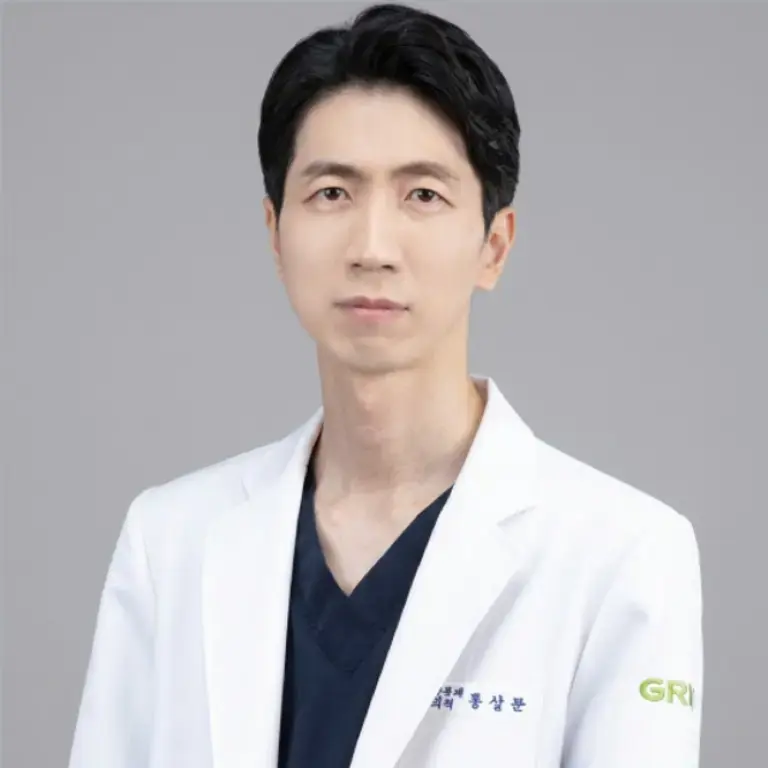
| Dr. Yong-Hae Seong Director of the Rhinoplasty Clinic | Dr. Sung-Moon Hong ENT Doctor | Dr. Sung-Hun Lee ENT Doctor | Dr. Young-Ha Lee Board-certified ENT specialist | Dr. Sun-Hong Kim ENT Doctor | Dr. Hee-Jung Park Anesthesiology Specialist GNG Hospital's Hump Nose Surgery is performed by a team whose precision technique supports this minimal-resection surgical philosophy: - Dr. Yong-Hae Seong, Director of the Rhinoplasty Clinic, brings over 26 years of ENT practice and a background as a former Associate Professor at the Catholic University of Korea, trained at Gangnam St. Mary's Hospital.
- Dr. Sung-Moon Hong contributes more than 21 years of ENT experience, holding a Doctor of Medicine from Korea University and a former Associate Professorship there.
- Dr. Sung-Hun Lee, with over 20 years in ENT, completed dedicated rhinologist training at Seoul St. Mary's Hospital under the Catholic University of Korea system.
- Dr. Young-Ha Lee is a board-certified ENT specialist and lifetime member of the Korean Society of Facial Plastic & Reconstructive Surgery, trained at Asan Medical Center and Wonju Severance Christian Hospital.
- Dr. Sun-Hong Kim serves as a Clinical Professor across Catholic University of Korea and Seoul St. Mary's Hospital, with expertise spanning rhinoplasty, sleep surgery, and laser treatments. Supporting the surgical team, Dr. Hee-Jung Park, an Anesthesiology Specialist with 21+ years of experience, ensures patient safety and comfort throughout the procedure. This team shares a common surgical philosophy: preserving as much of the patient's own cartilage and bone as possible produces a stronger, more stable, and more natural-looking result than an approach built around implant substitution. * * * ## Hump Nose Treatment Areas and Expected Improvements GNG Hospital matches its surgical approach to three distinct hump nose patterns: - Low Glabella and Drooping Tip with Hump: The protruding hump is shaved down, then autologous tissue or a biocompatible implant raises the bridge and glabella, while autologous cartilage lifts the drooping tip — using GNG's no-implant/autologous rhinoplasty approach where possible.
- Overall Large or High Hump: The hump area alone is selectively removed to smooth the bridge line, without altering bridge or glabella height that's already at a satisfactory level.
- Overall Low Nose with Protruding Hump: The hump is lightly filed down, then a custom-designed implant matched to the desired line and height is inserted to address the overall low profile alongside the hump.
- Bridge Width (When Osteotomy Is Needed): Osteotomy is not automatically performed for every hump correction — it's used selectively when the bridge is inherently wide, or when hump shaving alone would leave the bridge looking too wide, narrowing the structure for a definitive result in those specific cases. Expected improvements generally include a smoother bridge line without the hump, and when nasal obstruction surgery is combined, improved nasal airflow. As with any surgical procedure, results and recovery vary by individual, and no specific outcome is guaranteed. * * * ## Hump Nose Surgery Process and Timeline
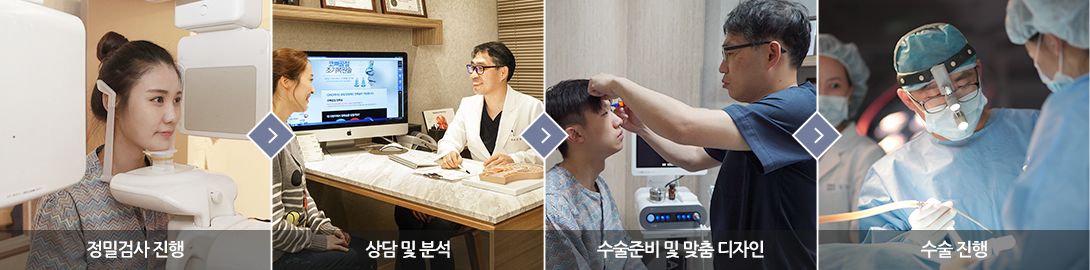 GNG Hospital follows a pattern-matched, minimal-resection process for hump correction: 1. Diagnostic Evaluation: The surgical team identifies which of the three hump patterns applies, and determines whether the bridge is inherently wide enough to require osteotomy, along with checking for an accompanying deviated septum or nasal valve stenosis.
- Minimal-Resection Hump Reduction: Only the minimal hump area is removed with precision technique, preserving maximum surrounding cartilage and bone rather than broadly resecting the area.
- Structural Correction by Pattern: Depending on the identified pattern, autologous tissue or implant is used to raise the bridge/glabella, autologous cartilage lifts a drooping tip, or a custom implant is inserted to address an overall low profile.
- Selective Osteotomy (If Needed): When the bridge is inherently wide, osteotomy narrows the structure; if a deviated septum is also present, it's corrected simultaneously, since a bent septum can prevent proper narrowing of one side of the nasal bone during osteotomy.
- Combined Nasal Obstruction Surgery (If Needed): When nasal valve stenosis or deviated septum is contributing to congestion, nasal valve reconstruction and/or septoplasty is performed in the same session for combined functional and cosmetic improvement.
- Immediate Aftercare: Patients receive guidance on swelling management and activity restrictions during the initial recovery period.
- Follow-Up: Follow-up visits monitor bridge smoothness, symmetry, and airflow improvement (if functional surgery was combined) as swelling resolves over subsequent weeks. * * * ## Results, Safety, and Longevity of Hump Nose Surgery A central safety advantage of GNG's minimal-resection approach is structural preservation. By removing only the minimal hump area rather than broadly resecting surrounding tissue, the technique minimizes implant reliance and preserves maximum cartilage and bone — providing stronger, more stable long-term support compared to standard approaches that lose significant structural tissue and depend more heavily on implants to fill the gap. Two specific concerns are addressed directly in GNG's approach. First, regrowth: bone and cartilage can microscopically proliferate during post-resection healing, and GNG's precise fine-contouring technique accounts for this tendency, focusing on a smooth finish so the bridge doesn't become bumpy or irregular again over time. Second, nasal obstruction risk: when osteotomy is combined with hump reduction to narrow the bridge, there's a risk of narrowing the internal nasal valve. GNG's ENT specialists address this directly by simultaneously performing nasal valve reconstruction to re-widen the narrowed valve, so patients typically experience easier breathing after surgery rather than worsened congestion. As with any surgical procedure, possible side effects can include swelling, bruising, infection, or asymmetry, and results and recovery vary from patient to patient; serious complications are uncommon but possible. * * * ## Why Choose GNG Hospital for Hump Nose Surgery?
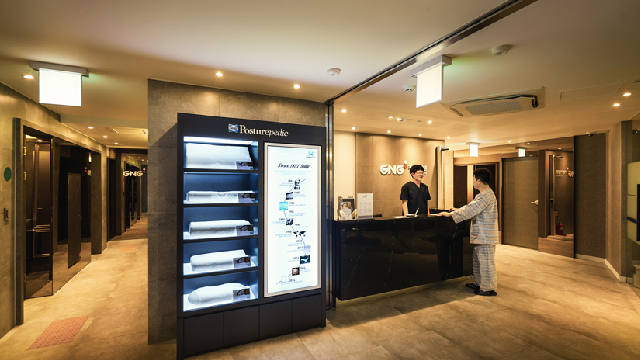 GNG Hospital is Korea's most dedicated rhinoplasty-only hospital, built on more than 15 years of singular focus on nasal medicine, with a surgical team composed primarily of board-certified ENT specialists rather than general plastic surgeons. According to 2024 HIRA (Health Insurance Review and Assessment Service) national data, GNG Hospital performed more septoplasty procedures than any other hospital-level medical institution in the country — directly relevant experience for the functional airway component so often combined with hump nose correction. What distinguishes GNG's approach to Hump Nose Surgery is its refusal to default to the broad-resection, implant-dependent technique used elsewhere. Dr. Yong-Hae Seong brings 26+ years of ENT practice as Director of the Rhinoplasty Clinic, joined by Dr. Sung-Moon Hong, Dr. Sung-Hun Lee, Dr. Young-Ha Lee, and Dr. Sun-Hong Kim, each contributing 20+ years of focused rhinology and facial surgery experience, with memberships in organizations such as the International Rhinologic Society and the American Academy of Aesthetic Plastic Surgery. GNG's care model is fully integrated within a purpose-built 13-story facility featuring HEPA-filtered operating rooms and university-hospital-grade diagnostic equipment, meaning diagnostic evaluation, minimal-resection hump surgery, and post-operative recovery all take place under one roof. The hospital also provides dedicated support for international, English-speaking patients from consultation through recovery, in a Gangnam, Seoul setting built for comfort and continuity of care. GNG Hospital's Hump Nose Surgery Advantages: - Minimal-resection technique preserving maximum cartilage and bone for stronger structural support
- Individualized approach matched to one of three distinct hump patterns rather than a uniform correction
- Selective osteotomy only when the bridge is inherently wide, avoiding unnecessary bone removal
- Simultaneous nasal valve reconstruction when osteotomy is performed, protecting against post-surgical airway narrowing * * * ## Real Patient Examples ### Low Glabella with Hump Patient, 20s Self-conscious about a prominent hump alongside a low glabella and drooping tip, this patient underwent GNG's autologous rhinoplasty approach — hump reduction combined with autologous tissue to raise the bridge and glabella, and cartilage grafting to lift the tip. ### Wide Bridge with Hump Patient, 30s This patient had a naturally wide bridge alongside a pronounced hump and mild nasal congestion. GNG's diagnostic workup identified an accompanying deviated septum, and the surgical team performed hump reduction with osteotomy, septum correction, and nasal valve reconstruction in the same session. * * * ## Take the Next Step Toward a Smoother, More Stable Bridge Line If a hump nose has left you weighing the tradeoff between correction and long-term structural stability, a minimal-resection technique may offer a way to achieve both. Schedule Your Hump Nose Consultation Take the first step toward a smoother bridge line without sacrificing structural support. Our surgical team will evaluate which hump pattern applies to your anatomy, determine whether osteotomy or combined functional surgery is appropriate, and walk you through a personalized surgical plan designed for a stable, natural-looking result. Prefer to speak with someone directly? Call our patient coordination team to discuss your goals and schedule your evaluation with GNG Hospital's Rhinoplasty Clinic.
Other Services
Explore additional treatments offered by our specialists.
Cosmetic Revision Rhinoplasty
Cosmetic Revision Rhinoplasty addresses dissatisfaction with the aesthetic outcome of a prior nose surgery — whether that's an asymmetric result, a bridge or tip shape that didn't turn out as planned, a visible or palpable implant, or an overall proportion…
Learn More

Implant-Free Rhinoplasty
Implant-Free Rhinoplasty (also called No-Implant) raises the nasal bridge and shapes the tip using zero synthetic implants — no silicone, no Gore-Tex.
Learn More
Hump Nose (Aquiline Nose)
Hump nose correction is often assumed to be a simple matter of shaving down the protruding bone — but that assumption misses an important structural reality.
Learn More