Personalized Medical Care & Dedicated International Patient Concierge


Core Rhinoplasty Procedures · Needs Clinic Confirmation
Aesthetic Angle Rhinoplasty
Aesthetic Angle Rhinoplasty focuses on the specific angles that determine how the nose is perceived in profile — most notably the nasolabial angle and the nasofrontal angle.
Schedule a ConsultationWhat Is Aesthetic Angle Rhinoplasty?  Aesthetic Angle Rhinoplasty focuses on the specific angles that determine how the nose is perceived in profile — most notably the nasolabial angle (the angle between the base of the nose and the upper lip) and the nasofrontal angle (the angle between the nasal bridge and the forehead). While many rhinoplasty procedures focus on bridge height or tip shape in isolation, angle correction takes a more relational approach, evaluating how the nose's position and rotation interact with surrounding facial landmarks to create overall harmony. A nose that is technically well-proportioned in isolation can still look unbalanced if its angles don't suit the individual's broader facial structure — for example, a nasolabial angle that is too acute can make the nose appear to droop, while one that is too obtuse can create an overly upturned look. Because these angles are closely tied to tip rotation and projection, aesthetic angle correction is often performed in conjunction with tip refinement, using cartilage grafting or repositioning techniques to achieve the target angle without compromising structural support. * * * ## Who Is a Good Candidate for Aesthetic Angle Rhinoplasty? Aesthetic Angle Rhinoplasty is best suited to patients whose primary concern is profile balance and proportion, rather than a single isolated nasal feature: - Adults in their 20s through 50s who feel their nose looks disproportionate specifically in side profile, even if satisfied with the front-facing appearance
- Patients with a drooping nasal tip caused by an overly acute nasolabial angle
- Individuals with an overly upturned tip resulting from an excessively obtuse nasolabial angle
- Patients whose nasal bridge and forehead don't transition smoothly, creating an unbalanced nasofrontal angle
- Those seeking overall facial harmony rather than an isolated change to bridge height or tip shape alone
- Patients who have had prior rhinoplasty that improved certain features but left the profile angles feeling unresolved
- Individuals who want their surgeon to consider the nose in relation to the lips, chin, and forehead, not as a standalone feature
- Patients seeking a natural, proportionate profile rather than a dramatic or exaggerated change * * * ## Meet the Specialists Behind GNG Hospital's Aesthetic Angle Rhinoplasty |
 |
 |
 |
 |
 |
| --- | --- | --- | --- | --- |
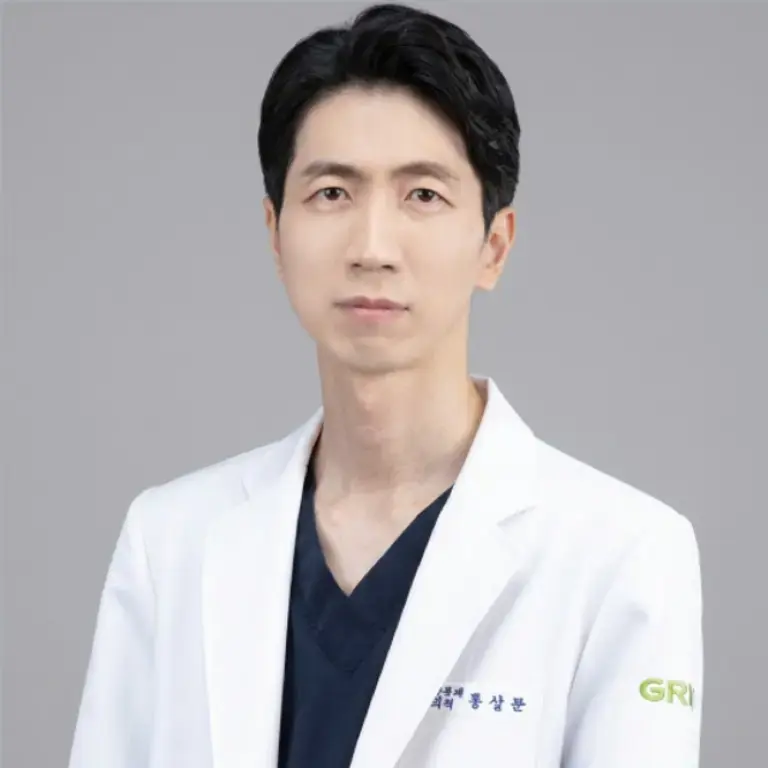
| Dr. Yong-Hae Seong Director of the Rhinoplasty Clinic | Dr. Sung-Moon Hong ENT Doctor | Dr. Sung-Hun Lee ENT Doctor | Dr. Young-Ha Lee Board-certified ENT specialist | Dr. Sun-Hong Kim ENT Doctor | Dr. Hee-Jung Park Anesthesiology Specialist GNG Hospital's Aesthetic Angle Rhinoplasty is performed by a team whose anatomical expertise supports this proportion-focused surgical approach: - Dr. Yong-Hae Seong, Director of the Rhinoplasty Clinic, brings over 26 years of ENT practice and a background as a former Associate Professor at the Catholic University of Korea, trained at Gangnam St. Mary's Hospital.
- Dr. Sung-Moon Hong contributes more than 21 years of ENT experience, holding a Doctor of Medicine from Korea University and a former Associate Professorship there.
- Dr. Sung-Hun Lee, with over 20 years in ENT, completed dedicated rhinologist training at Seoul St. Mary's Hospital under the Catholic University of Korea system.
- Dr. Young-Ha Lee is a board-certified ENT specialist and lifetime member of the Korean Society of Facial Plastic & Reconstructive Surgery, trained at Asan Medical Center and Wonju Severance Christian Hospital.
- Dr. Sun-Hong Kim serves as a Clinical Professor across Catholic University of Korea and Seoul St. Mary's Hospital, with expertise spanning rhinoplasty, sleep surgery, and laser treatments. Supporting the surgical team, Dr. Hee-Jung Park, an Anesthesiology Specialist with 21+ years of experience, ensures patient safety and comfort throughout the procedure. This team shares a common surgical philosophy: the nose should be evaluated and shaped in relation to the whole face, not adjusted as an isolated feature disconnected from surrounding facial proportions. * * * ## Aesthetic Angle Rhinoplasty Treatment Areas and Expected Improvements GNG Hospital's Aesthetic Angle Rhinoplasty addresses the specific structural points that define nasal angle and profile balance: - Nasolabial Angle: The angle formed between the base of the nose and the upper lip. Adjusting this angle through tip rotation and columella refinement can correct a drooping or overly upturned tip appearance, aiming for a proportion that suits the patient's individual facial structure.
- Nasofrontal Angle: The transition point between the nasal bridge and the forehead. When this angle is too shallow or too steep, the bridge can appear disconnected from the rest of the facial profile; targeted adjustment aims to create a smoother, more natural transition.
- Tip Rotation and Projection: Because angle correction is closely linked to how the tip is positioned, cartilage grafting or repositioning techniques are often used to achieve the desired rotation while maintaining adequate structural support for the tip.
- Overall Profile Balance: Rather than focusing on a single measurement, GNG's approach considers how these angles work together across the full facial profile, aiming for a nose that looks proportionate when viewed alongside the forehead, lips, and chin. Expected improvements generally include a more balanced side-profile appearance and improved harmony between the nose and surrounding facial features. As with any surgical procedure, results and recovery vary by individual, and no specific outcome is guaranteed. * * * ## Aesthetic Angle Rhinoplasty Process and Timeline
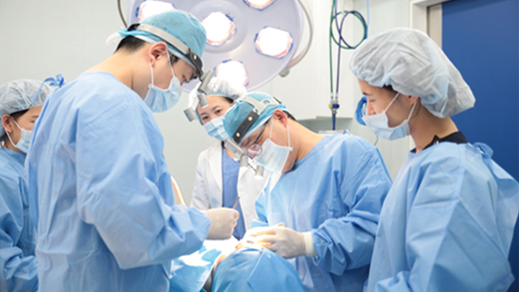 GNG Hospital follows a proportion-focused planning process for angle correction: 1. Consultation and Facial Analysis: The surgical team evaluates the patient's nasolabial and nasofrontal angles in relation to their broader facial proportions, often supported by diagnostic imaging to assess underlying structural factors.
- Surgical Planning: Based on this analysis, a plan is developed that may involve tip rotation, columella adjustment, or bridge refinement, tailored to achieve the target angles without compromising structural integrity.
- Angle Correction Surgery: Cartilage grafting or repositioning techniques are used to adjust the relevant angle, coordinated with any additional bridge or tip work included in the surgical plan.
- Immediate Aftercare: Patients receive guidance on swelling management, activity restrictions, and nasal care during the initial recovery period.
- Follow-Up: Follow-up visits monitor healing and profile balance as swelling resolves, allowing the surgical team to assess how the corrected angles are settling over time. * * * ## Results, Safety, and Longevity of Aesthetic Angle Rhinoplasty Because aesthetic angle correction often relies on cartilage grafting and repositioning to achieve a target rotation, the durability of results depends on adequate structural support being built into the surgical plan — a consideration GNG's surgical team factors into each case rather than treating angle adjustment as a purely cosmetic surface change. As with any surgical procedure, possible side effects can include swelling, bruising, infection, or asymmetry, and results and recovery vary from patient to patient; serious complications are uncommon but possible. Profile balance is inherently an individualized outcome — what constitutes an ideal nasolabial or nasofrontal angle varies by facial structure, gender, and personal aesthetic goals, which is why GNG emphasizes a personalized consultation process rather than applying a single standard measurement to every patient. * * * ## Why Choose GNG Hospital for Aesthetic Angle Rhinoplasty?
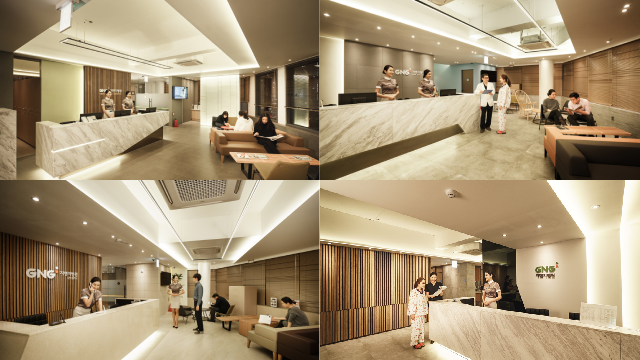 GNG Hospital is Korea's most dedicated rhinoplasty-only hospital, built on more than 15 years of singular focus on nasal medicine, with a surgical team composed primarily of board-certified ENT specialists rather than general plastic surgeons. According to 2024 HIRA (Health Insurance Review and Assessment Service) national data, GNG Hospital performed more septoplasty procedures than any other hospital-level medical institution in the country, and roughly 1 in every 2 rhinoplasty patients in Korea chose GNG for their surgery — a verifiable statistic reflecting sustained surgical experience across the full range of rhinoplasty techniques, including proportion-focused angle correction. This depth of experience is reflected across the surgical team. Dr. Yong-Hae Seong brings 26+ years of ENT practice as Director of the Rhinoplasty Clinic, joined by Dr. Sung-Moon Hong, Dr. Sung-Hun Lee, Dr. Young-Ha Lee, and Dr. Sun-Hong Kim, each contributing 20+ years of focused rhinology and facial surgery experience, with memberships in organizations such as the International Rhinologic Society and the American Academy of Aesthetic Plastic Surgery. GNG's care model is fully integrated within a purpose-built 13-story facility featuring HEPA-filtered operating rooms and university-hospital-grade diagnostic equipment, meaning consultation, angle correction surgery, and post-operative recovery all take place under one roof. The hospital also provides dedicated support for international, English-speaking patients from consultation through recovery, in a Gangnam, Seoul setting built for comfort and continuity of care. GNG Hospital's Aesthetic Angle Rhinoplasty Advantages: - Profile-focused surgical planning that evaluates the nose in relation to the forehead, lips, and chin
- Individualized angle targets rather than a single standardized measurement applied to every patient
- Surgical team with deep rhinoplasty and facial proportion expertise across 20+ years of average experience per specialist
- Integrated facility allowing consultation, surgery, and recovery within a single location * * * ## Real Patient Examples ### Drooping Tip Patient, 20s This patient felt their nasal tip appeared to droop when viewed in profile, despite being satisfied with the front-facing shape of their nose. After consultation at GNG Hospital, the surgical team identified an overly acute nasolabial angle as the underlying cause and performed tip rotation to achieve a more balanced profile. ### Profile Imbalance Patient, 30s Having previously undergone rhinoplasty focused on bridge height, this patient still felt their profile looked unbalanced where the bridge met the forehead. GNG's surgical team assessed the nasofrontal angle and performed targeted refinement to create a smoother transition between the two features. * * * ## Take the Next Step Toward a More Balanced Profile If your nose looks disproportionate specifically in side profile, even when the front view seems fine, an angle-focused approach may address what standard rhinoplasty alone has missed. Schedule Your Aesthetic Angle Rhinoplasty Consultation Take the first step toward a more harmonious facial profile. Our surgical team will evaluate your nasolabial and nasofrontal angles in relation to your unique facial structure, and walk you through a personalized surgical plan designed to bring your profile into better balance. Prefer to speak with someone directly? Call our patient coordination team to discuss your goals and schedule your evaluation with GNG Hospital's Rhinoplasty Clinic.
Other Services
Explore additional treatments offered by our specialists.

Cosmetic Revision Rhinoplasty
Cosmetic Revision Rhinoplasty addresses dissatisfaction with the aesthetic outcome of a prior nose surgery — whether that's an asymmetric result, a bridge or tip shape that didn't turn out as planned, a visible or palpable implant, or an overall proportion…
Learn More

Implant-Free Rhinoplasty
Implant-Free Rhinoplasty (also called No-Implant) raises the nasal bridge and shapes the tip using zero synthetic implants — no silicone, no Gore-Tex.
Learn More

Hump Nose (Aquiline Nose)
Hump nose correction is often assumed to be a simple matter of shaving down the protruding bone — but that assumption misses an important structural reality.
Learn More