Personalized Medical Care & Dedicated International Patient Concierge


Nasal Obstruction Surgery · Needs Clinic Confirmation
Rhinitis
Rhinitis is an inflammatory condition of the nasal mucosa that causes a cluster of familiar symptoms: a runny nose, sneezing, nasal congestion, and itching.
Schedule a ConsultationWhat Is Rhinitis, and Why Does It Need Early Treatment?  Rhinitis is an inflammatory condition of the nasal mucosa that causes a cluster of familiar symptoms: a runny nose, sneezing, nasal congestion, and itching. Left untreated in its early stages, rhinitis tends to become chronic — and chronic rhinitis is both harder to treat and more likely to trigger additional complications. Because rhinitis can stem from a wide range of causes — allergens, environmental exposure, or an overactive immune response — a single standard treatment rarely works for every patient. At GNG Hospital, nasal obstruction surgery and rhinitis care begin with precise diagnostic testing to identify the specific cause behind each patient's symptoms, followed by a treatment plan built around that individual's condition. This may involve medication, immunotherapy, functional surgery, or a combination of approaches, depending on what the diagnostic workup reveals.
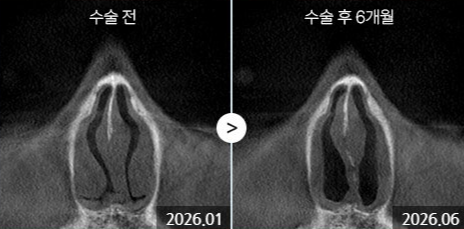 One of the most overlooked consequences of untreated rhinitis is chronic mouth-breathing. When nasal breathing becomes difficult, patients instinctively shift to breathing through the mouth — a habit that can worsen existing symptoms and introduce new ones. This is a central reason GNG Hospital emphasizes early, accurate diagnosis rather than a delayed or generic treatment path. * * * ## Who Needs Rhinitis Treatment or Nasal Obstruction Surgery?
 Rhinitis and nasal obstruction affect people across a wide age range, but certain patterns tend to point toward the need for professional evaluation: - Adults and teenagers in their teens through 60s experiencing persistent nasal congestion that doesn't resolve with over-the-counter remedies
- Patients with recurring sneezing, clear runny nose, and nasal itching, particularly when symptoms follow a seasonal or environmental pattern
- Individuals who have shifted to chronic mouth-breathing due to difficulty breathing through the nose
- Patients who suspect a structural cause — such as a deviated septum or enlarged turbinates — rather than a purely allergic one
- Those who have tried general allergy medications without lasting relief and want a more targeted, diagnosis-driven approach
- Patients experiencing headaches or difficulty concentrating that may be linked to chronic nasal obstruction
- Individuals who underwent rhinitis surgery elsewhere and experienced recurrence or unresolved symptoms
- People who prefer a stepped treatment approach, starting conservatively and escalating only if medically necessary * * * ## Meet the ENT Specialists Behind GNG Hospital's Rhinitis Care |
 |
 |
 |
 |
 |
| --- | --- | --- | --- | --- |
| Dr. Yong-Hae Seong Director of the Rhinoplasty Clinic | Dr. Sung-Moon Hong ENT Doctor | Dr. Sung-Hun Lee ENT Doctor | Dr. Young-Ha Lee Board-certified ENT specialist | Dr. Sun-Hong Kim ENT Doctor | | |
 |
| --- | --- |
| Dr. Do-Jin Hyun Sleep Medicine Doctor | Dr. Hee-Jung Park Anesthesiology Specialist | GNG Hospital's rhinitis and nasal obstruction treatment is led by a team of board-certified ENT specialists, each contributing distinct expertise to patient care: - Dr. Yong-Hae Seong, Director of the Rhinoplasty Clinic, brings over 26 years of ENT practice and previously served as an Associate Professor at the Catholic University of Korea, having trained at Gangnam St. Mary's Hospital. - Dr. Sung-Moon Hong contributes more than 21 years of ENT experience, holding a Doctor of Medicine from Korea University and a former Associate Professorship there.
- Dr. Sung-Hun Lee, with over 20 years in ENT, trained specifically as a rhinologist at Seoul St. Mary's Hospital under the Catholic University of Korea system.
- Dr. Young-Ha Lee is a board-certified ENT specialist and lifetime member of the Korean Society of Facial Plastic & Reconstructive Surgery, trained at both Asan Medical Center and Wonju Severance Christian Hospital.
- Dr. Sun-Hong Kim serves as a Clinical Professor across Catholic University of Korea and Seoul St. Mary's Hospital, with particular expertise spanning rhinoplasty, sleep surgery, and laser-based treatments — directly relevant to the laser turbinate reduction option offered for rhinitis. Supporting the surgical team, Dr. Do-Jin Hyun, a Sleep Medicine Specialist and Registered Polysomnographic Technologist with 15+ years of experience, addresses the sleep-related impact that chronic nasal obstruction can have. Dr. Hee-Jung Park, an Anesthesiology Specialist with 21+ years of experience, oversees patient safety and comfort during procedures requiring anesthesia. Together, this team is united by a shared, diagnosis-first care philosophy: identify the precise cause of each patient's rhinitis before recommending a path forward, rather than defaulting to a generic protocol. * * * ## Rhinitis Treatment Areas and What to Expect GNG Hospital's rhinitis care targets the specific structures within the nasal passage most commonly responsible for chronic symptoms: - Nasal Mucosa: The lining most directly affected by rhinitis-related inflammation. Diagnostic testing evaluates how allergens, environmental triggers, or immune responses are affecting this tissue, guiding whether medication or immunotherapy is the appropriate starting point. Because the mucosa's reaction can vary considerably between patients, individualized assessment is central to determining the right medical management strategy.
- Inferior Turbinates: When these structures become enlarged due to chronic rhinitis, the nasal airway narrows even though the surrounding anatomy is otherwise normal. Laser turbinate reduction is used specifically for this scenario, reducing the mucosal surface area to help restore airflow without addressing structures that aren't the source of the problem.
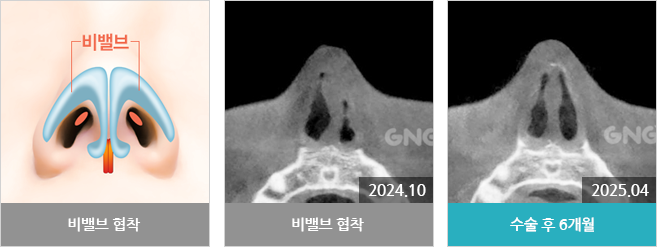 - Nasal Septum: A deviated septum can irritate the inferior turbinate, contributing to or worsening congestion and rhinitis symptoms. Septoplasty corrects this structural deviation using a minimal-resection technique designed to straighten the septum while reducing the likelihood of side effects or recurrence.
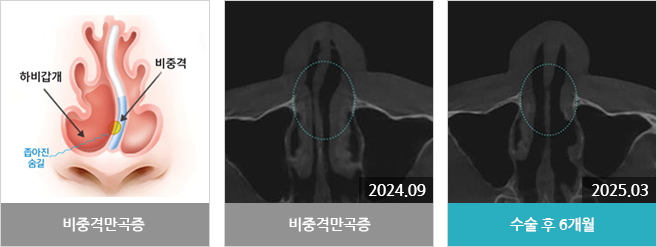 - Nasal Valve: Located at the upper "roof" of the nasal passage, this area regulates airflow into the nose. When it narrows — a condition known as nasal valve stenosis — congestion and rhinitis symptoms often follow. Nasal valve reconstruction surgically expands this internal space to improve airflow.
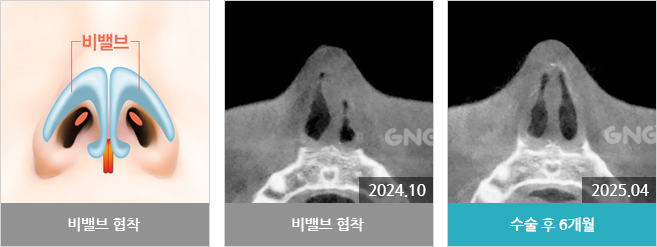 Expected improvements following treatment generally include reduced nasal congestion, decreased sneezing and clear discharge, and easier nasal breathing that may reduce reliance on mouth-breathing. As with any medical or surgical treatment, results and recovery vary by individual, and no specific outcome can be guaranteed. * * * ## Rhinitis Treatment Process and Timeline: From Diagnosis to Recovery GNG Hospital follows a structured, cause-based process for rhinitis and nasal obstruction treatment: 1. Diagnostic Evaluation: Advanced diagnostic testing is used to determine the specific cause of a patient's rhinitis — whether allergic, environmental, immune-related, or structural — before any treatment is recommended.
- Personalized Treatment Planning: Based on diagnostic findings, the medical team designs an individualized plan that may involve medication, immunotherapy, functional surgery, or a combination, matched to the patient's specific condition.
- Treatment Delivery: - Medication: Antihistamines, topical steroids, or anticholinergic sprays are prescribed based on individual symptom patterns to relieve sneezing and clear rhinorrhea. - Immunotherapy: Antigens are introduced gradually over months to years via subcutaneous injection (small doses injected directly into the skin) or sublingual immunotherapy (antigen absorbed through the tissue beneath the tongue), inducing antibody formation over time. - Functional Surgery: For structural causes, laser turbinate reduction is performed under local anesthesia in approximately 10–20 minutes; septoplasty takes roughly 15–25 minutes under local anesthesia; nasal valve reconstruction is performed under general anesthesia over approximately 30–40 minutes.
- Immediate Aftercare: Laser turbinate reduction patients can typically resume normal activity immediately. Septoplasty and nasal valve reconstruction patients are generally advised to expect a return to normal activity after approximately 3–4 days.
- Follow-Up and Monitoring: Patients are monitored for symptom improvement and any signs of complications such as bleeding, infection, or swelling, with continued care adjusted as needed.
- Long-Term Continuation (Immunotherapy Patients): For patients undergoing immunotherapy, GNG Hospital offers nationwide-linked continuation care, allowing patients who live far from the hospital to continue their treatment closer to home over the multi-month to multi-year immunotherapy course. * * * ## Results, Safety, and Longevity of Rhinitis Treatment The expected timeline and safety profile depend on which treatment path is used. Medication-based treatment offers symptom relief for sneezing and clear rhinorrhea while it is being taken, with effects generally tied to the duration of use rather than being permanent. Immunotherapy works more gradually, aiming to build long-term tolerance to specific allergens over a treatment course spanning months to years. Functional surgical procedures — laser turbinate reduction, septoplasty, and nasal valve reconstruction — are structural interventions intended to produce a more lasting improvement in airflow when a structural cause is confirmed. That said, GNG Hospital is direct about the fact that results and recovery vary by individual, and possible side effects across these procedures include bleeding, infection, and swelling. Serious complications are uncommon but possible, which is why post-procedure monitoring is part of every treatment plan. For patients considering revision rhinitis surgery, it's worth understanding why recurrence happens in the first place: most commonly, an unresolved root cause, a missed diagnosis, or an initial treatment that didn't fully address the underlying structural or immune issue. Surgical revision also carries specific considerations — for example, excessive turbinate removal during a prior procedure can lead to chronic dryness of the nose, throat, or mouth, or to nasal bleeding and stinging. Because a failed first surgery often results in tissue adhesion, a second surgery tends to be more technically difficult. For this reason, GNG Hospital places particular emphasis on thorough root-cause analysis and a newly designed, systematic treatment plan for any revision case, rather than repeating the same approach. * * * ## Why Choose GNG Hospital for Rhinitis Treatment?
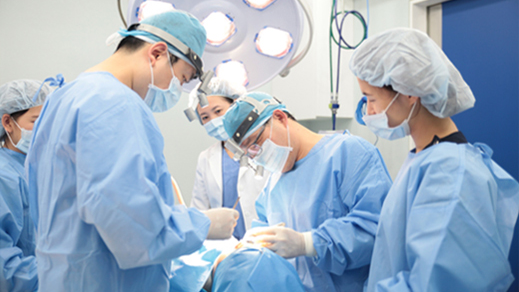 GNG Hospital is not a general plastic surgery or ENT practice that treats rhinitis as one service among many — it is a hospital built around 15+ years of singular focus on nasal medicine, with six board-certified ENT specialists who practice exclusively in this field. According to 2024 HIRA (Health Insurance Review and Assessment Service) national data, GNG Hospital performed more septoplasty procedures than any other hospital-level medical institution in Korea, and roughly 1 in every 2 rhinoplasty patients in the country chose GNG for their surgery — figures drawn from a verified national database rather than internal marketing claims. The depth of experience across the medical team reflects this focus. Dr. Yong-Hae Seong brings 26+ years of ENT practice as Director of the Rhinoplasty Clinic, while Dr. Sung-Moon Hong, Dr. Sung-Hun Lee, Dr. Young-Ha Lee, and Dr. Sun-Hong Kim each contribute 20+ years of focused rhinology and facial surgery experience, with memberships spanning organizations such as the International Rhinologic Society and the American Academy of Aesthetic Plastic Surgery. This is complemented by Dr. Do-Jin Hyun's sleep medicine expertise for patients whose nasal obstruction affects breathing during sleep, and Dr. Hee-Jung Park's 21+ years in anesthesiology supporting safe surgical care. GNG Hospital's care model is fully integrated within a purpose-built 13-story facility featuring HEPA-filtered operating rooms, university-hospital-grade diagnostic equipment, and 30+ private inpatient rooms — meaning diagnosis, treatment, and post-operative recovery all take place within a single facility rather than requiring patients to coordinate across multiple providers. The hospital also welcomes international patients from Gangnam, Seoul, with dedicated support designed to make the experience comfortable for English-speaking and overseas patients from arrival through recovery. GNG Hospital's Rhinitis Care Advantages: - Diagnostic-first approach using advanced testing systems to identify the specific cause of each patient's rhinitis before recommending treatment
- A stepped treatment model — medication, immunotherapy, or functional surgery — matched to the individual rather than applied uniformly
- Nationwide-linked immunotherapy continuation, allowing patients outside the immediate area to continue long-term treatment closer to home
- A dedicated team combining ENT, rhinology, sleep medicine, and anesthesiology expertise under one roof for complex or revision cases * * * ## Real Patient Examples ### Chronic Nasal Congestion Patient, 30s After years of relying on over-the-counter allergy medication with limited relief, this patient underwent diagnostic testing at GNG Hospital that identified turbinate hypertrophy as a contributing structural factor. Following laser turbinate reduction alongside a personalized medication plan, the patient reported easier nasal breathing and reduced reliance on daily medication during follow-up visits. ### Recurrent Rhinitis Patient, 40s (Revision Case) Having undergone rhinitis surgery elsewhere with symptoms returning within a year, this patient sought a second opinion at GNG Hospital. A thorough diagnostic workup identified an unresolved deviated septum as the underlying cause missed in the original treatment. A revision septoplasty was planned based on this new assessment. * * * ## Take the Next Step Toward Lasting Relief from Rhinitis If chronic congestion, sneezing, or nasal obstruction is affecting your daily life, don't wait for it to become harder to treat — schedule a diagnostic consultation with GNG Hospital's ENT specialists today. Schedule Your Rhinitis Diagnostic Consultation Take the first step toward understanding the true cause of your nasal congestion, sneezing, or breathing difficulty. Our board-certified ENT team will review your symptoms, conduct advanced diagnostic testing, and walk you through a personalized treatment plan — whether that means medication, immunotherapy, or functional surgery — so you can make an informed decision about your care. Prefer to speak with someone directly? Call our patient coordination team to discuss your symptoms and schedule your evaluation with GNG Hospital's Rhinoplasty Clinic.
Other Services
Explore additional treatments offered by our specialists.

Crooked Nose
A crooked nose can be congenital or the result of acquired trauma, and it's a genuinely complex surgical challenge requiring extensive ENT specialist experience.
Learn More

Wide Nose
A wide nose — a spread or flat-looking nasal bridge — is fundamentally a bone-width issue, not something an implant alone can correct.
Learn More

Alar (Nostril) Reduction
Alar Reduction narrows the overall width of spread-looking alar (nostril wings), addressing a concern where wide nostrils can make the tip look less refined and can even make the bridge appear comparatively lower than it actually is.
Learn More