Personalized Medical Care & Dedicated International Patient Concierge


Rhinoplasty by Type · Needs Clinic Confirmation
Crooked Nose
A crooked nose can be congenital or the result of acquired trauma, and it's a genuinely complex surgical challenge requiring extensive ENT specialist experience.
Schedule a ConsultationWhat Causes a Crooked Nose, and Why Isn't It Just About the Bone?  A crooked nose can be congenital or the result of acquired trauma, and it's a genuinely complex surgical challenge requiring extensive ENT specialist experience. What's often overlooked is that a cited 99% of crooked nose cases accompany a deviated septum — meaning the external curvature you see is frequently connected to an internal structural problem, not just a bent bone. Left uncorrected, this combination can lead to additional conditions like nasal congestion, migraine, rhinitis, and sinusitis. GNG Hospital's approach recognizes that a crooked nose isn't a single problem with a single fix. Curvature can originate in three distinct locations — the septal cartilage, the nasal bone itself, or the tip cartilage — and each requires a different surgical technique matched to its degree and location, rather than a uniform correction applied regardless of cause. * * * ## Who Needs Crooked Nose Surgery? Crooked Nose Surgery is suited to patients whose nose is visibly bent, whether from birth or from prior trauma: - Adults in their 20s through 50s with a visibly crooked or bent nasal bridge, tip, or both
- Patients with a congenital crooked nose present since childhood
- Individuals whose crooked nose developed after facial trauma or injury
- Patients experiencing nasal congestion, rhinitis, sinusitis, or migraines alongside their crooked nose appearance
- Those who suspect an accompanying deviated septum, even if it wasn't previously diagnosed
- Patients who previously had crooked nose correction elsewhere using suture-only fixation and experienced recurrence
- Individuals interested in combining crooked nose correction with cosmetic bridge or tip rhinoplasty in one surgical session
- Patients concerned about long-term recurrence and interested in understanding fixation technique before deciding on surgery * * * ## Meet the Specialists Behind GNG Hospital's Crooked Nose Surgery |
 |
 |
 |
 |
 |
| --- | --- | --- | --- | --- |
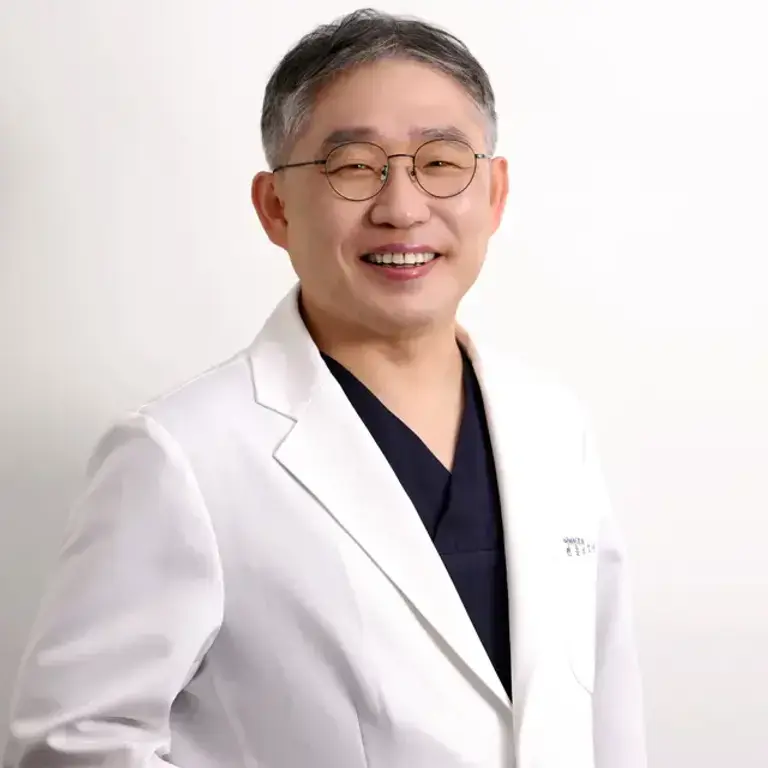
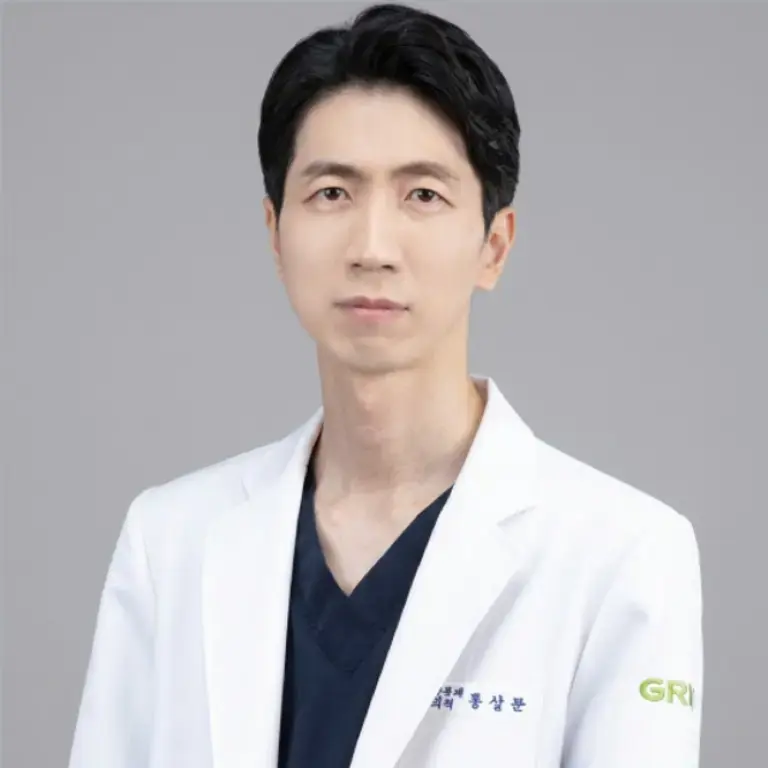
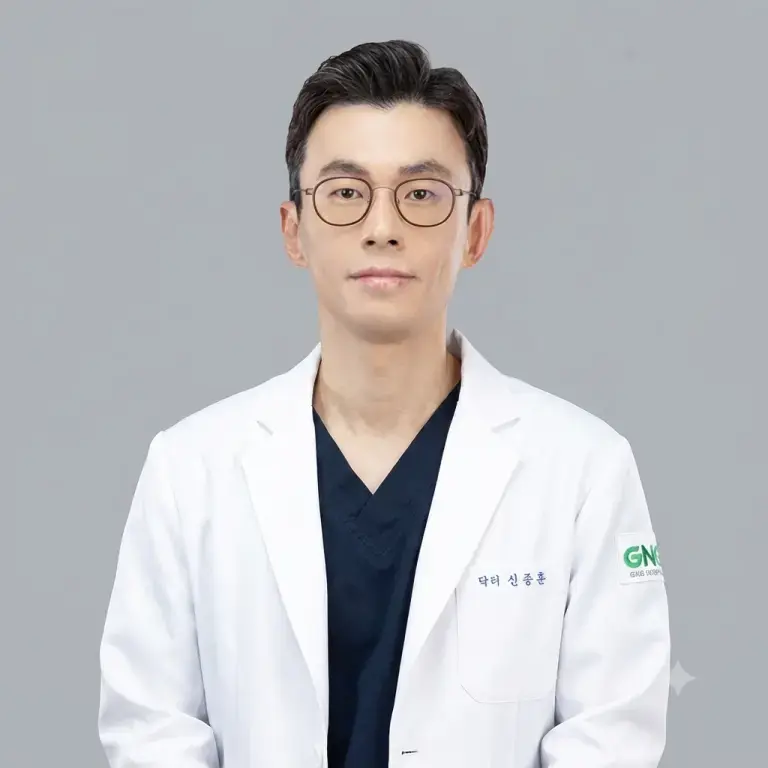
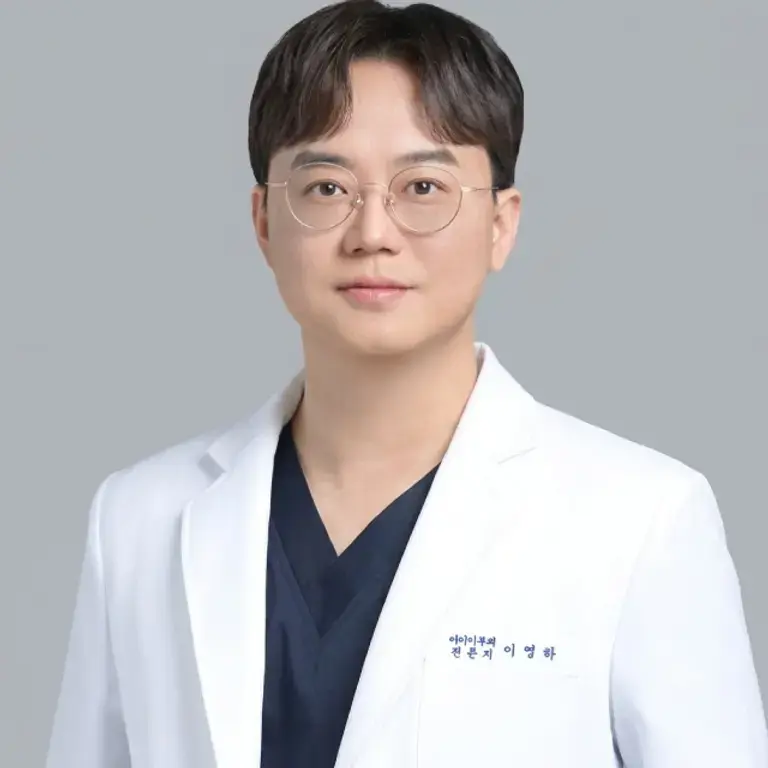
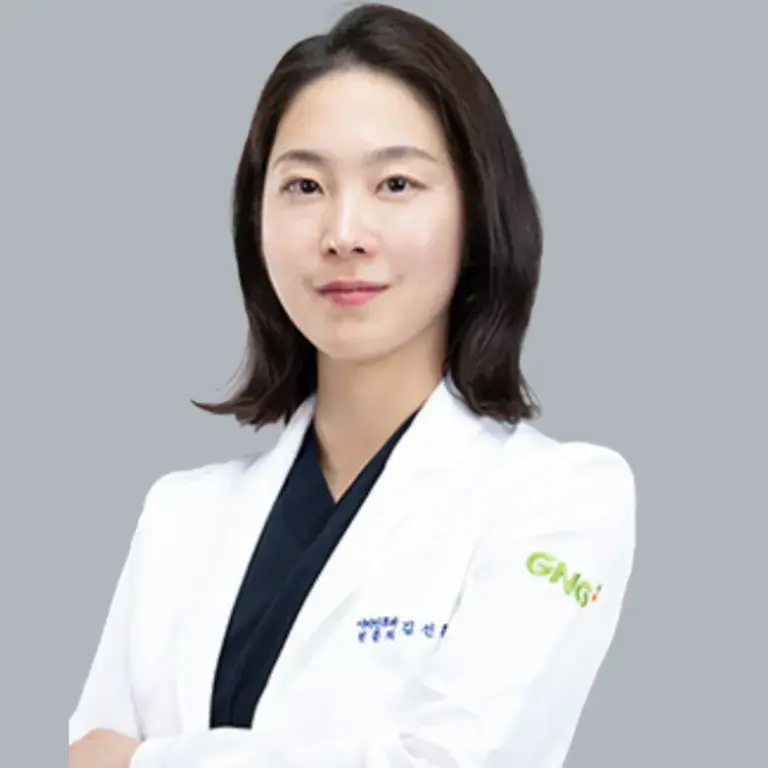
| Dr. Yong-Hae Seong Director of the Rhinoplasty Clinic | Dr. Sung-Moon Hong ENT Doctor | Dr. Sung-Hun Lee ENT Doctor | Dr. Young-Ha Lee Board-certified ENT specialist | Dr. Sun-Hong Kim ENT Doctor |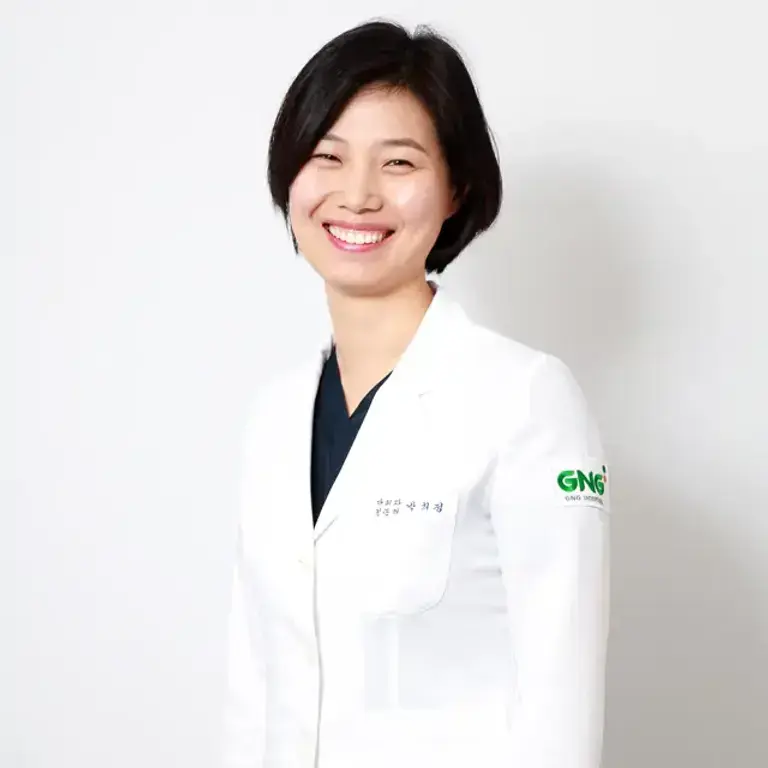 Dr. Hee-Jung Park Anesthesiology Specialist GNG Hospital's Crooked Nose Surgery is performed by a team whose structural expertise supports this technically demanding, location-specific surgical approach: - Dr. Yong-Hae Seong, Director of the Rhinoplasty Clinic, brings over 26 years of ENT practice and a background as a former Associate Professor at the Catholic University of Korea, trained at Gangnam St. Mary's Hospital.
- Dr. Sung-Moon Hong contributes more than 21 years of ENT experience, holding a Doctor of Medicine from Korea University and a former Associate Professorship there.
- Dr. Sung-Hun Lee, with over 20 years in ENT, completed dedicated rhinologist training at Seoul St. Mary's Hospital under the Catholic University of Korea system.
- Dr. Young-Ha Lee is a board-certified ENT specialist and lifetime member of the Korean Society of Facial Plastic & Reconstructive Surgery, trained at Asan Medical Center and Wonju Severance Christian Hospital.
- Dr. Sun-Hong Kim serves as a Clinical Professor across Catholic University of Korea and Seoul St. Mary's Hospital, with expertise spanning rhinoplasty, sleep surgery, and laser treatments. Supporting the surgical team, Dr. Hee-Jung Park, an Anesthesiology Specialist with 21+ years of experience, ensures patient safety and comfort throughout this complex procedure. This team shares a common surgical philosophy: correcting a crooked nose means correcting its true internal cause — not just the external appearance — since these are almost always connected. * * * ## Crooked Nose Treatment Areas and Expected Improvements GNG Hospital's Crooked Nose Surgery addresses three distinct curvature locations, each matched to a specific technique: - Deviated Septal Cartilage: The most common contributor, addressed by first straightening the bent septum and trimming excess cartilage. Unlike standard crooked-nose correction, which typically relies on simple sutures alone (carrying high recurrence risk), GNG's wedge-graft cartilage repositioning technique grafts wedge-shaped supports — using septal or donated rib cartilage — on both sides of the straightened septum, secured with dissolving sutures for substantially stronger, recurrence-resistant fixation.
- Nasal Bone Curvature: When the bone itself is bent, GNG's nasal bone osteotomy method separates the crooked bone via medial and lateral osteotomy, then moves and realigns the separated segments centered on the frontal view before fixing them straight.
- Nasal Tip Curvature: When only the tip cartilage is bent, the tip cartilage and septal cartilage ends are tied together with thread, which is then pulled to erect the tip straight and vertically — creating properly aligned nostrils and a straightened tip.
- Deviated Septum (Nearly Always Present): Since 99% of crooked noses accompany a deviated septum, GNG always tests for and corrects this simultaneously with external curvature correction, since leaving it untreated carries high re-bending risk and can cause or worsen nasal congestion, rhinitis, or sinusitis. Expected improvements generally include a straighter, more symmetrical nasal appearance and, when the septum is corrected, improved nasal airflow. As with any surgical procedure, results and recovery vary by individual, and no specific outcome is guaranteed. * * * ## Crooked Nose Surgery Process and Timeline
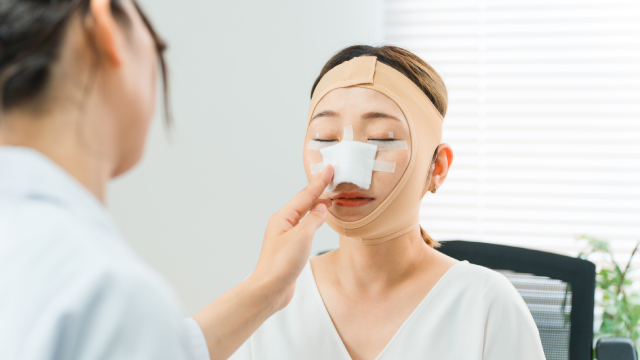 GNG Hospital follows a location-specific, precision-diagnosed process for crooked nose correction: 1. 3D-CT Diagnostic Evaluation: Precision imaging identifies exactly where the curvature originates — septal cartilage, nasal bone, tip cartilage, or a combination — along with confirming whether a deviated septum is present.
- Curvature-Matched Surgical Planning: Based on the diagnostic findings, the surgical team selects the specific technique matched to each curvature location, since a uniform approach doesn't address the range of possible causes.
- Structural Correction Surgery: Depending on diagnosis, wedge-graft cartilage repositioning, nasal bone osteotomy, tip cartilage thread-fixation, or a combination is performed, always alongside deviated septum correction when present.
- Double Protection Splinting: After surgery, an internal silastic splint stabilizes the nasal internal structure to prevent recurrence and blocks space where blood could pool, while a custom-fitted external X-Lite splint — made of the same rigid, breathable material used in orthopedic casts — protects against external impact.
- Optional Simultaneous Cosmetic Rhinoplasty: Patients wanting bridge or tip reshaping in addition to structural correction can have this performed in the same surgical session.
- Immediate Aftercare: Patients receive guidance on splint care, swelling management, and activity restrictions during the initial recovery period.
- Follow-Up: Follow-up visits monitor straightness, symmetry, and healing as swelling resolves and splints are removed over subsequent weeks. * * * ## Results, Safety, and Longevity of Crooked Nose Surgery A central safety and durability consideration in crooked nose surgery is fixation strength, since corrected cartilage has a natural tendency to try to revert to its original bent position. GNG Hospital's wedge-graft cartilage repositioning technique — grafting wedge-shaped cartilage supports on both sides of the straightened septum and securing them with dissolving sutures — is specifically designed to provide much stronger, more recurrence-resistant fixation compared to standard suture-only approaches used elsewhere. Post-operative protection also plays a safety role: GNG's double protection system combines an internal silastic splint (which stabilizes internal structure, blocks space where blood could pool to prevent hematoma and infection, and uses body-safe, verified-stability material) with a custom-fitted external X-Lite splint (using the same rigid material as orthopedic casts for impact protection, while remaining breathable to prevent skin irritation). As with any surgical procedure, possible side effects can include swelling, bruising, infection, or asymmetry, and results and recovery vary from patient to patient; serious complications are uncommon but possible. Because crooked nose surgery is not simply bone-shaving — its core is correcting internal structure — GNG emphasizes that skipping either the bone realignment or the septal correction component raises meaningful recurrence risk. * * * ## Why Choose GNG Hospital for Crooked Nose Surgery?
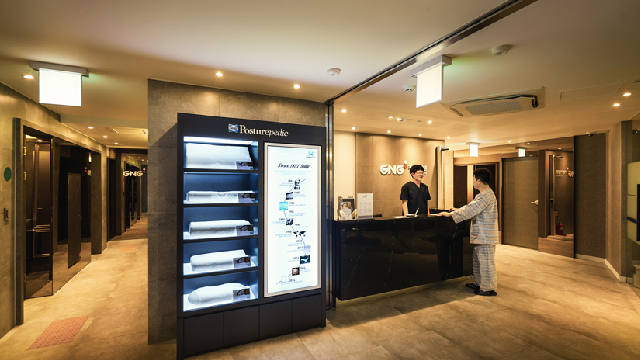 GNG Hospital is Korea's most dedicated rhinoplasty-only hospital, built on more than 15 years of singular focus on nasal medicine, with a surgical team composed primarily of board-certified ENT specialists rather than general plastic surgeons. According to 2024 HIRA (Health Insurance Review and Assessment Service) national data, GNG Hospital performed more septoplasty procedures than any other hospital-level medical institution in the country — directly relevant experience for the septal correction component present in nearly every crooked nose case. What distinguishes GNG's approach to Crooked Nose Surgery is its refusal to treat curvature as a single, uniform problem. Dr. Yong-Hae Seong brings 26+ years of ENT practice as Director of the Rhinoplasty Clinic, joined by Dr. Sung-Moon Hong, Dr. Sung-Hun Lee, Dr. Young-Ha Lee, and Dr. Sun-Hong Kim, each contributing 20+ years of focused rhinology and facial surgery experience, with memberships in organizations such as the International Rhinologic Society and the American Academy of Aesthetic Plastic Surgery. GNG's care model is fully integrated within a purpose-built 13-story facility featuring HEPA-filtered operating rooms and university-hospital-grade diagnostic equipment, meaning 3D-CT diagnosis, curvature-matched surgery, and post-operative recovery all take place under one roof. The hospital also provides dedicated support for international, English-speaking patients from consultation through recovery, in a Gangnam, Seoul setting built for comfort and continuity of care. GNG Hospital's Crooked Nose Surgery Advantages: - Curvature-matched technique addressing septal cartilage, nasal bone, or tip cartilage individually based on precise diagnosis
- Wedge-graft cartilage repositioning for stronger, recurrence-resistant fixation compared to suture-only methods
- Simultaneous deviated septum correction in virtually every case, given the 99% co-occurrence rate
- Double internal-external splint protection system designed to prevent recurrence and protect healing * * * ## Real Patient Examples ### Congenital Crooked Nose Patient, 20s Self-conscious about a visibly bent bridge since childhood, this patient underwent 3D-CT diagnosis at GNG Hospital that identified both septal cartilage curvature and a deviated septum. The surgical team performed wedge-graft cartilage repositioning alongside septum correction in a single procedure. ### Trauma-Related Crooked Nose Patient, 30s Following a sports injury years earlier, this patient developed a visibly crooked nasal bone alongside chronic congestion. GNG's diagnostic workup confirmed nasal bone curvature and an accompanying deviated septum, and the surgical team performed nasal bone osteotomy combined with septum correction. * * * ## Take the Next Step Toward a Straighter, More Stable Nose If a crooked or bent nose has left you wondering whether correction will last, a technique matched precisely to your specific curvature — combined with proper fixation — may offer the durable result you're looking for. Schedule Your Crooked Nose Consultation Take the first step toward a straighter, more symmetrical nose. Our surgical team will conduct a detailed 3D-CT evaluation to identify exactly where your curvature originates, and walk you through a personalized surgical plan designed with strong, recurrence-resistant fixation. Prefer to speak with someone directly? Call our patient coordination team to discuss your goals and schedule your evaluation with GNG Hospital's Rhinoplasty Clinic.
Other Services
Explore additional treatments offered by our specialists.
Crooked Nose
A crooked nose can be congenital or the result of acquired trauma, and it's a genuinely complex surgical challenge requiring extensive ENT specialist experience.
Learn More

Wide Nose
A wide nose — a spread or flat-looking nasal bridge — is fundamentally a bone-width issue, not something an implant alone can correct.
Learn More

Alar (Nostril) Reduction
Alar Reduction narrows the overall width of spread-looking alar (nostril wings), addressing a concern where wide nostrils can make the tip look less refined and can even make the bridge appear comparatively lower than it actually is.
Learn More