Personalized Medical Care & Dedicated International Patient Concierge


Core Rhinoplasty Procedures · Needs Clinic Confirmation
Septal Rhinoplasty
Septal Rhinoplasty is a combined surgical approach that corrects a deviated septum before performing cosmetic rhinoplasty on the bridge and tip, using the reinforced septum as a stable internal foundation for the rest of the nose.
Schedule a ConsultationWhat Is Septal Rhinoplasty?  Septal Rhinoplasty is a combined surgical approach that corrects a deviated septum before performing cosmetic rhinoplasty on the bridge and tip, using the reinforced septum as a stable internal foundation for the rest of the nose. Rather than treating structural correction and cosmetic reshaping as separate, unrelated procedures, GNG Hospital's approach addresses them together, aiming for a nose shape that is both sturdier and more aesthetically refined than cosmetic surgery performed on its own. The reasoning behind this combined approach comes down to basic structural mechanics. The septum acts as the central pillar of the nose, and if that pillar is bent or weak, raising the bridge places strain on an already unstable foundation. Straightening and reinforcing the septum first allows the bridge to be built higher with less structural burden — since a well-supported pillar can bear that additional height more reliably. On the flip side, performing cosmetic rhinoplasty without first correcting an existing deviated septum carries real risk: the bridge or tip implant can warp or shift downward over time, the septal deviation itself may progressively worsen, and there are limits on how high the bridge can safely be raised. GNG Hospital notes that this is not a hypothetical risk — cases exist where implant warping requiring revision surgery occurred specifically because septum correction was skipped during the original procedure. It's also worth understanding that a nose can look externally straight while still having internal septal deviation — something only confirmable through 3D-CT imaging and specialist diagnosis. This is part of why GNG emphasizes thorough diagnostic imaging before finalizing a surgical plan, even for patients who don't perceive an obvious structural problem. * * * ## Who Needs Septal Rhinoplasty? Septal Rhinoplasty is suited to patients whose cosmetic rhinoplasty goals intersect with an underlying structural concern: - Adults in their 20s through 50s seeking cosmetic rhinoplasty who also have a diagnosed or suspected deviated septum
- Patients with a visibly crooked or bent nose, where the bridge and tip are noticeably deviated and require simultaneous septal correction for a lasting result
- Individuals with a wide nose or hooked/hump nose who need nasal bone osteotomy to narrow the bridge, where addressing the septum at the same time is necessary for a reliable outcome
- Patients with weak nasal tip support who want a more structurally sound foundation for tip refinement
- Those who want a natural-looking rhinoplasty result using their own tissue rather than synthetic grafting material alone
- Patients who also experience nasal congestion and want to address both functional breathing and cosmetic goals in one surgical plan
- Individuals who have been told their nose looks externally straight but experience congestion or asymmetry that may indicate internal septal deviation
- Patients concerned about long-term stability of their rhinoplasty result and want to avoid future implant warping or bridge deformity * * * ## Meet the Specialists Behind GNG Hospital's Septal Rhinoplasty |
 |
 |
 |
 |
 |
| --- | --- | --- | --- | --- |
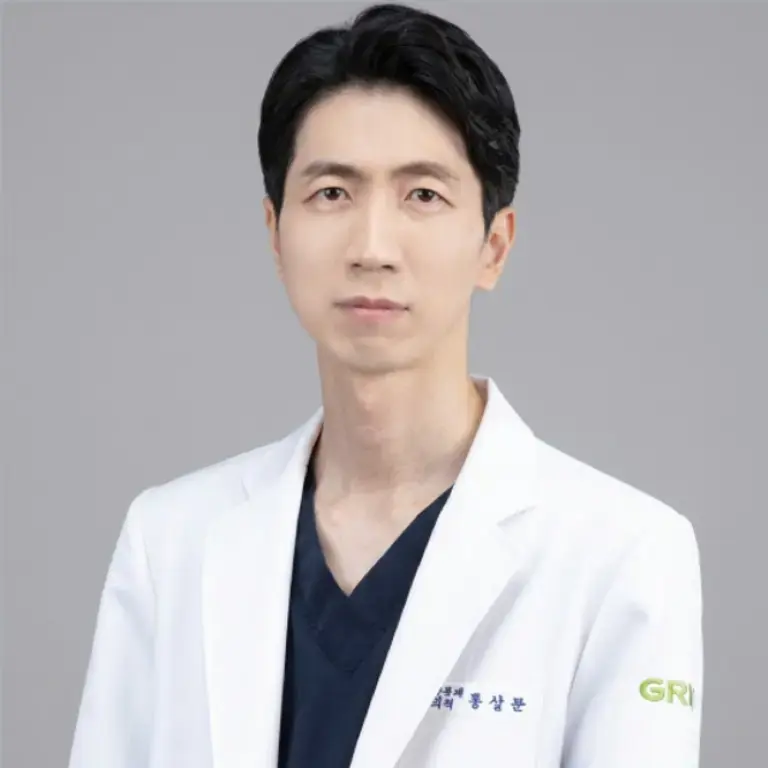
| Dr. Yong-Hae Seong Director of the Rhinoplasty Clinic | Dr. Sung-Moon Hong ENT Doctor | Dr. Sung-Hun Lee ENT Doctor | Dr. Young-Ha Lee Board-certified ENT specialist | Dr. Sun-Hong Kim ENT Doctor | Dr. Hee-Jung Park Anesthesiology Specialist GNG Hospital's Septal Rhinoplasty is performed by a team of specialists whose combined structural and cosmetic expertise underpins this demanding surgical technique: - Dr. Yong-Hae Seong, Director of the Rhinoplasty Clinic, brings over 26 years of ENT practice and a background as a former Associate Professor at the Catholic University of Korea, trained at Gangnam St. Mary's Hospital. Dr. Seong has spoken directly about the importance of addressing structural nasal issues alongside cosmetic goals, rather than treating rhinoplasty as a purely aesthetic procedure.
- Dr. Sung-Moon Hong contributes more than 21 years of ENT experience, holding a Doctor of Medicine from Korea University and a former Associate Professorship there.
- Dr. Sung-Hun Lee, with over 20 years in ENT, completed dedicated rhinologist training at Seoul St. Mary's Hospital under the Catholic University of Korea system — experience directly relevant to septal structural work.
- Dr. Young-Ha Lee is a board-certified ENT specialist and lifetime member of the Korean Society of Facial Plastic & Reconstructive Surgery, trained at Asan Medical Center and Wonju Severance Christian Hospital.
- Dr. Sun-Hong Kim serves as a Clinical Professor across Catholic University of Korea and Seoul St. Mary's Hospital, with expertise spanning rhinoplasty, sleep surgery, and laser treatments. Supporting the surgical team, Dr. Hee-Jung Park, an Anesthesiology Specialist with 21+ years of experience, ensures patient safety and comfort throughout this combined structural and cosmetic procedure. This team shares a defining surgical philosophy: a well-built nose starts from a reinforced internal foundation, not just external reshaping — improving both the functional and cosmetic completion quality of the final result. * * * ## Septal Rhinoplasty Treatment Areas and Expected Improvements
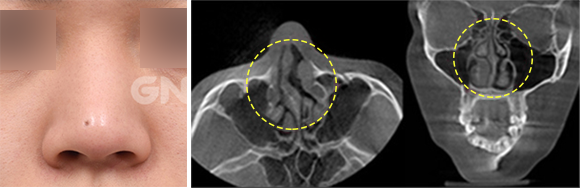 Septal Rhinoplasty addresses the nose as an interconnected structure, working from the inside out: - Nasal Septum: The foundational structure corrected first in this procedure. Beyond simply straightening a bent septum, GNG's technique also reinforces and strengthens it, providing a stable pillar that can support a raised bridge without the strain or long-term deformity risk associated with building on a weak foundation.
- Nasal Bridge: Once the septum is corrected and reinforced, the bridge can be shaped and raised with reduced risk of the implant or graft warping over time — a common long-term concern when bridge augmentation is performed without addressing an underlying septal deviation.
- Nasal Tip: Surplus septal cartilage obtained during the septum correction is reused as columella and tip-supporting strut material. Because this cartilage is autologous (the patient's own tissue), it carries a lower risk of foreign-body sensation or complications compared to synthetic tip-support materials, while favoring a more natural nose-line result.
- Crooked or Wide Nose Structures: For patients with a visibly bent nose or a wide/hooked nasal bridge requiring osteotomy, correcting the septum simultaneously with the external reshaping addresses the root structural cause, rather than leaving the underlying deviation to potentially cause recurrence or worsening congestion later. Expected improvements generally include a more structurally stable, natural-looking rhinoplasty outcome with reduced risk of long-term shape change. As with any surgical procedure, results and recovery vary by individual, and no specific outcome is guaranteed. * * * ## Septal Rhinoplasty Process and Timeline GNG Hospital's Septal Rhinoplasty follows a structured, foundation-first surgical sequence: 1. Diagnostic Imaging and Consultation: 3D-CT imaging and specialist evaluation confirm the internal status of the septum, even in patients whose nose appears externally straight, to determine the full scope of correction needed.
- Surgical Planning: The surgical team develops a combined plan addressing both the structural septal correction and the desired cosmetic outcome for the bridge and tip.
- Septum Correction and Reinforcement: The deviated septum is straightened and structurally reinforced first, establishing a stable internal pillar to support subsequent bridge work.
- Cartilage Harvesting and Cosmetic Reshaping: Surplus septal cartilage obtained during correction is reused as tip and columella support material, and the bridge and tip are shaped according to the patient's cosmetic goals, built on the newly reinforced foundation.
- Immediate Aftercare: Patients receive post-operative guidance on swelling management, activity restrictions, and nasal care during the initial recovery period.
- Follow-Up: Follow-up visits monitor healing of both the structural correction and the cosmetic shaping, tracking how the nose settles as swelling resolves over subsequent weeks. * * * ## Results, Safety, and Longevity of Septal Rhinoplasty A key advantage of Septal Rhinoplasty's foundation-first approach is its intent to reduce long-term complications associated with cosmetic rhinoplasty performed on an uncorrected septum. Because the septum structurally supports the entire nose, reinforcing it before cosmetic shaping is designed to reduce the risk of the bridge or tip implant warping, lowering, or deforming over time — a documented risk when cosmetic work is performed on a septum that was never corrected. The use of autologous septal cartilage for tip support also plays into the safety profile: because this is the patient's own tissue, it carries a lower risk of foreign-body sensation or rejection-related complications compared to synthetic materials, while contributing to a more natural-looking result. As with any surgical procedure combining structural and cosmetic elements, possible side effects can include swelling, bruising, infection, or asymmetry, and results and recovery vary from patient to patient; serious complications are uncommon but possible. GNG Hospital is direct that this combined technique — correcting and reinforcing the septum rather than only straightening it — is a high-difficulty procedure requiring an experienced specialist, which is central to why the hospital emphasizes surgeon expertise as a key factor in achieving a reliable, lasting outcome. * * * ## Why Choose GNG Hospital for Septal Rhinoplasty?
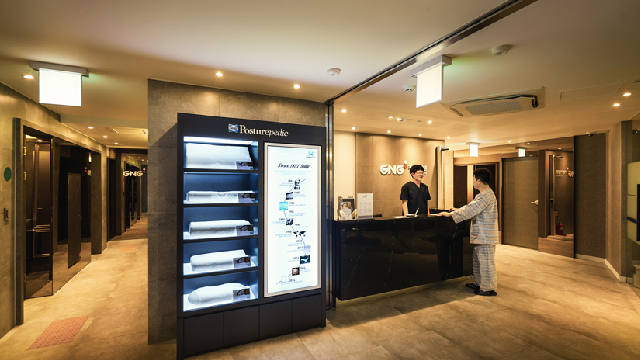 GNG Hospital is Korea's most dedicated rhinoplasty-only hospital, built on more than 15 years of singular focus on nasal medicine, with a surgical team composed primarily of board-certified ENT specialists rather than general plastic surgeons. According to 2024 HIRA (Health Insurance Review and Assessment Service) national data, GNG Hospital performed more septoplasty procedures than any other hospital-level medical institution in the country — directly relevant experience for the structural component that defines Septal Rhinoplasty. What distinguishes GNG's approach is its refusal to separate structural and cosmetic rhinoplasty into disconnected procedures. Dr. Yong-Hae Seong brings 26+ years of ENT practice as Director of the Rhinoplasty Clinic, and has emphasized that a well-built nose depends on a reinforced internal foundation, not external reshaping alone. He is joined by Dr. Sung-Moon Hong, Dr. Sung-Hun Lee, Dr. Young-Ha Lee, and Dr. Sun-Hong Kim, each contributing 20+ years of focused rhinology and facial surgery experience, with memberships in organizations such as the International Rhinologic Society and the American Academy of Aesthetic Plastic Surgery. GNG's care model is fully integrated within a purpose-built 13-story facility featuring HEPA-filtered operating rooms and university-hospital-grade diagnostic equipment, meaning 3D-CT diagnostic imaging, combined structural-cosmetic surgery, and post-operative recovery all take place under one roof. The hospital also provides dedicated support for international, English-speaking patients from consultation through recovery, in a Gangnam, Seoul setting built for comfort and continuity of care. GNG Hospital's Septal Rhinoplasty Advantages: - Reinforces the septum rather than only straightening it — a higher-difficulty technique intended to reduce long-term bridge/tip deformity risk
- Uses the patient's own surplus septal cartilage as tip-support material, favoring natural results and lower complication risk
- 3D-CT diagnostic confirmation of internal septal status, even for patients with an externally straight-looking nose
- Simultaneous correction of crooked, wide, or hooked/hump nose structures alongside the underlying septal deviation * * * ## Real Patient Examples ### Crooked Nose Patient, 20s This patient had a visibly bent bridge and tip that a prior consultation elsewhere suggested treating with external correction alone. At GNG Hospital, 3D-CT imaging confirmed accompanying septal deviation, and the surgical team performed septum correction alongside bridge and tip reshaping in a single procedure, aiming to reduce recurrence risk. ### Revision-Minded Patient, 30s Concerned about long-term stability after hearing about implant warping in cases where septum correction was skipped, this patient sought a foundation-first approach for their rhinoplasty. GNG's surgical team reinforced the patient's deviated septum before shaping the bridge and tip using the patient's own cartilage. * * * ## Take the Next Step Toward a Stronger, More Natural Nose Line If you're considering rhinoplasty and want your results built on a stable, reinforced foundation rather than shaped on top of an uncorrected structural issue, Septal Rhinoplasty may be worth exploring. Schedule Your Septal Rhinoplasty Consultation Take the first step toward a rhinoplasty result built to last. Our surgical team will conduct 3D-CT diagnostic imaging to assess your internal septal structure, walk you through whether combined septal and cosmetic correction fits your goals, and guide you through what to expect from consultation to recovery. Prefer to speak with someone directly? Call our patient coordination team to discuss your goals and schedule your evaluation with GNG Hospital's Rhinoplasty Clinic.
Other Services
Explore additional treatments offered by our specialists.

Upturned Nose/Short Nose
Though often confused, upturned nose and short nose are distinct diagnoses that require different surgical approaches.
Learn More

Nostril Surgery
Nostril Surgery, or nostril rhinoplasty, addresses the complexes that can arise from upturned, drooping, asymmetric, or overly large nostrils.
Learn More

Rhinitis
Rhinitis is an inflammatory condition of the nasal mucosa that causes a cluster of familiar symptoms: a runny nose, sneezing, nasal congestion, and itching.
Learn More