Personalized Medical Care & Dedicated International Patient Concierge


Nasal Obstruction Surgery · Needs Clinic Confirmation
Deviated Septum
The nasal septum is the vertical wall of cartilage and bone that divides the nostrils. When this structure is bent or twisted — classified as either C-type or S-type.
Schedule a ConsultationWhat Is a Deviated Septum, and Why Does It Cause Nasal Obstruction?  The nasal septum is the vertical wall of cartilage and bone that divides the nostrils. When this structure is bent or twisted — classified as either C-type or S-type — the condition is known as a deviated septum, and it commonly results in nasal congestion. In fact, an estimated 70% of patients experiencing chronic nasal congestion in Korea have some degree of septal deviation, even in cases where the outer appearance of the nose looks perfectly straight. This is why accurate diagnostic testing matters: a normal-looking nose bridge doesn't rule out a structural cause of chronic congestion, rhinitis, or sinusitis.
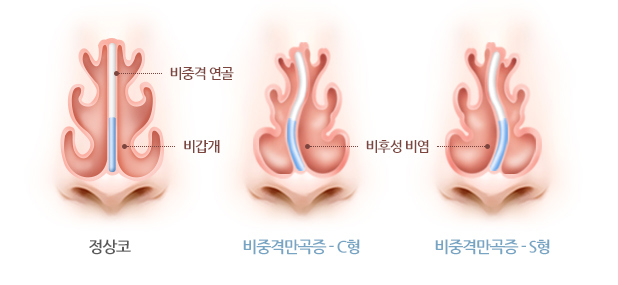 In a normally structured nose, air flows freely through both nostrils. With a deviated septum, however, the bend narrows the airway on one side, disrupting airflow. This can create persistent congestion on the narrower side, alternating congestion between the left and right nostril, or a pattern where congestion worsens specifically when lying on one side to sleep. Nasal obstruction surgery for a deviated septum is aimed at correcting this underlying structural issue rather than simply managing the resulting symptoms. Left unaddressed, chronic congestion caused by a deviated septum can trigger a wider set of problems. The septum pressing against the nasal mucosa can irritate surrounding nerves, contributing to migraines and sore throat. The obstruction often forces patients into habitual mouth-breathing, which can disrupt sleep and lead to bad breath. In more severe cases, the resulting sleep disruption and chronic discomfort can extend to reduced concentration and memory, affecting day-to-day functioning. * * * ## Who Needs Deviated Septum Treatment? Deviated septum correction is typically considered for patients experiencing structural, rather than purely inflammatory, nasal obstruction: - Adults in their 20s through 60s with chronic, one-sided or alternating nasal congestion that doesn't resolve with allergy medication
- Patients who notice worsened congestion when lying on one side to sleep, a hallmark pattern of septal deviation
- Individuals with frequent nosebleeds, headaches, or sore throat that may be linked to structural airflow obstruction
- Patients experiencing snoring or reduced sleep quality potentially tied to chronic mouth-breathing from nasal obstruction
- Those who have been treated for rhinitis or sinusitis without lasting improvement, suggesting an underlying structural cause
- Patients with a visibly straight nose bridge who are still experiencing chronic congestion and want to rule out internal septal deviation
- Individuals interested in combining functional correction with cosmetic rhinoplasty, using surplus septal cartilage for nasal tip refinement
- Patients who have had prior septoplasty elsewhere with recurring symptoms and are seeking a more thorough diagnostic-based revision approach * * * ## Meet the ENT Specialists Behind GNG Hospital's Deviated Septum Care |
 |
 |
 |
 |
 |
| --- | --- | --- | --- | --- |
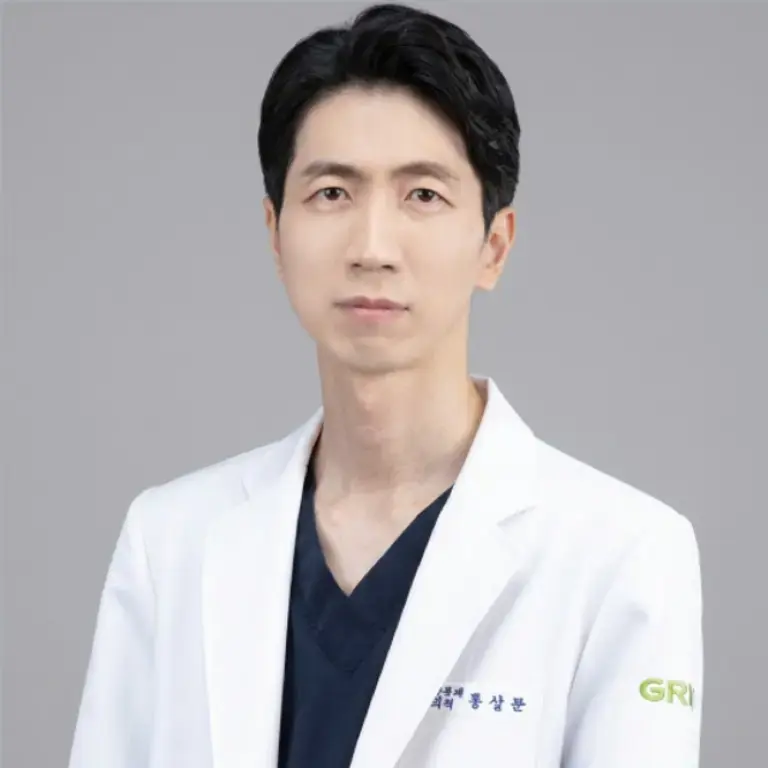
| Dr. Yong-Hae Seong Director of the Rhinoplasty Clinic | Dr. Sung-Moon Hong ENT Doctor | Dr. Sung-Hun Lee ENT Doctor | Dr. Young-Ha Lee Board-certified ENT specialist | Dr. Sun-Hong Kim ENT Doctor | | |
 |
| --- | --- |
| Dr. Do-Jin Hyun Sleep Medicine Doctor | Dr. Hee-Jung Park Anesthesiology Specialist | GNG Hospital's approach to deviated septum correction is led by a team of board-certified ENT specialists with deep, focused experience in nasal structural surgery: - Dr. Yong-Hae Seong, Director of the Rhinoplasty Clinic, brings over 26 years of ENT practice and a background as a former Associate Professor at the Catholic University of Korea, having trained at Gangnam St. Mary's Hospital. Dr. Seong has spoken directly on the distinction between cosmetic and functional rhinoplasty, emphasizing that correcting nasal obstruction through internal structural work is a domain unique to trained ENT specialists. - Dr. Sung-Moon Hong contributes more than 21 years of ENT experience, holding a Doctor of Medicine from Korea University and a former Associate Professorship there.
- Dr. Sung-Hun Lee, with over 20 years in ENT, completed dedicated rhinologist training at Seoul St. Mary's Hospital under the Catholic University of Korea system — directly relevant experience for structural septal correction.
- Dr. Young-Ha Lee is a board-certified ENT specialist and lifetime member of the Korean Society of Facial Plastic & Reconstructive Surgery, trained at Asan Medical Center and Wonju Severance Christian Hospital.
- Dr. Sun-Hong Kim serves as a Clinical Professor across Catholic University of Korea and Seoul St. Mary's Hospital, with expertise spanning rhinoplasty, sleep surgery, and laser treatments. Rounding out the team, Dr. Do-Jin Hyun, a Sleep Medicine Specialist and Registered Polysomnographic Technologist with 15+ years of experience, addresses cases where deviated septum contributes to sleep-disordered breathing, while Dr. Hee-Jung Park, an Anesthesiology Specialist with 21+ years of experience, ensures patient safety throughout surgical procedures. This team shares a common approach: precise structural diagnosis before surgical planning, rather than a one-size-fits-all correction. * * * ## Deviated Septum Treatment Areas and What to Expect GNG Hospital's deviated septum correction targets the specific anatomical structures responsible for chronic nasal obstruction: - Nasal Septum: The primary structure addressed in septoplasty. GNG's minimal-resection technique removes only the curved portion of cartilage causing obstruction, then straightens the remaining cartilage into the space created — a more conservative approach than removing large sections of septal tissue, since the septum plays a structural, load-bearing role for the nasal column.
- Inferior Turbinates: A deviated septum often irritates the inferior turbinate on the narrowed side, contributing to or worsening congestion. Correcting the septal deviation addresses this secondary irritation as part of the same surgical plan.
- Nasal Valve: In some patients, nasal valve stenosis — narrowing at the upper "roof" of the nasal passage — coexists with septal deviation. When this is present, septum correction alone will not fully resolve congestion, so GNG performs nasal valve reconstruction simultaneously to ensure adequate airflow restoration.
- Nasal Tip (When Combined with Cosmetic Rhinoplasty): For patients choosing to combine functional correction with cosmetic refinement, surplus septal cartilage obtained during septoplasty can be reused as grafting material to help define the nasal tip, allowing structural and aesthetic goals to be addressed in a single procedure. Expected improvements after successful deviated septum correction generally include more balanced airflow between both nostrils, reduced congestion-related headaches and sore throat, and less reliance on mouth-breathing. As with any surgical procedure, results and recovery vary by individual, and no specific outcome is guaranteed. * * * ## Deviated Septum Treatment Process and Timeline
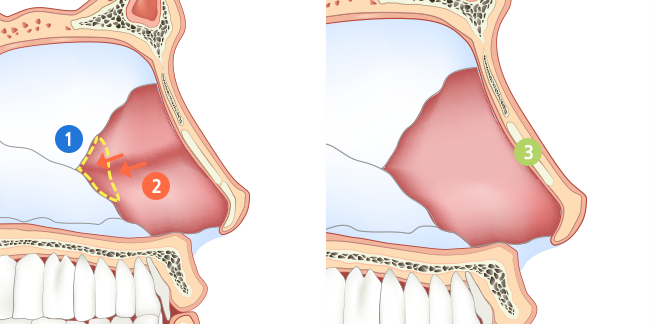 GNG Hospital follows a structured, diagnosis-driven process for deviated septum correction: 1. Advanced Diagnostic Imaging: Before surgery, the curved portion of the septal cartilage is identified using advanced 3D-CT imaging and nasal endoscopy, allowing the ENT specialist to precisely map the deviation.
- Surgical Planning: The ENT specialist analyzes the diagnostic findings in detail and develops a comprehensive surgical plan tailored to the specific pattern and severity of the patient's septal deviation.
- Minimal-Resection Surgery: Performed under local anesthesia over approximately 15–25 minutes, the procedure involves incising and removing only the curved section of septal cartilage, then straightening the remaining cartilage into the resulting space to complete a fully straightened septum. When needed, a supportive strut or graft is implanted for secure fixation, and nasal valve correction is performed simultaneously if valve stenosis is also present.
- Same-Day Discharge: Same-day discharge is generally possible following the procedure, without requiring an extended hospital stay.
- Early Recovery: Mild discomfort or stuffiness is common immediately after surgery. Most patients can expect to resume normal daily activity within approximately 3–4 days.
- Follow-Up and Full Recovery: Post-operative discomfort typically resolves fully within about one week, at which point patients generally experience the intended improvement in nasal breathing. * * * ## Results, Safety, and Longevity of Deviated Septum Correction GNG Hospital's minimal-resection approach is specifically designed with recurrence prevention in mind. Because a previously deviated septum has a natural tendency to try to revert to its original shape, the clinic combines thorough pre-operative diagnosis (3D-CT imaging, endoscopy, and specialist evaluation) with a surgical technique performed by ENT specialists with 10+ years of experience, who remove and suture only the precisely optimized minimal section for each patient. When additional stability is needed, a supportive strut or graft is implanted to help secure the correction. Removing only the minimum necessary cartilage also has a safety rationale: because the septum provides structural support for the nasal column, more extensive removal — as used in some conventional techniques — can increase the risk of complications. GNG's conservative resection approach is intended to reduce this risk while still achieving a straightened septal structure. As with any surgical procedure, possible side effects can include bleeding, infection, or swelling, and results and recovery vary from patient to patient. Post-operative discomfort is generally described as mild, with most patients returning to normal activity within 3–4 days and experiencing full resolution of stuffiness within about a week. Serious complications are uncommon but possible, and patients are advised to discuss their individual risk profile during consultation. Regarding cost, a portion of surgical expenses — commonly cited as 80–90% — may be covered under personal actual-loss insurance, though coverage varies significantly by individual policy, and patients are encouraged to confirm details with their insurer based on their specific diagnosis. * * * ## Why Choose GNG Hospital for Deviated Septum Treatment?
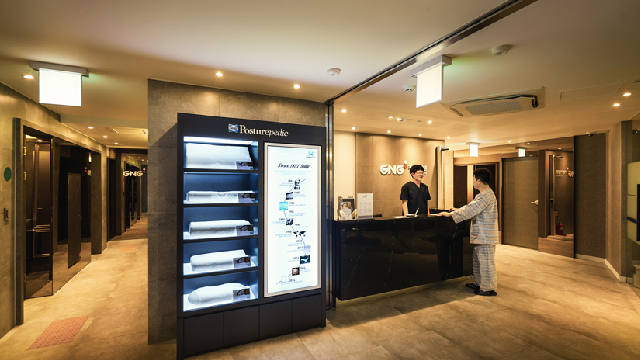 GNG Hospital is Korea's most dedicated rhinoplasty-only hospital, built around more than 15 years of singular focus on nasal medicine, with six board-certified ENT specialists who practice exclusively in this field. According to 2024 HIRA (Health Insurance Review and Assessment Service) national data, GNG Hospital performed more septoplasty procedures than any other hospital-level medical institution in the country — a verifiable statistic reflecting sustained surgical experience specifically in deviated septum correction, rather than a general claim. The surgical team's depth of experience reinforces this focus. Dr. Yong-Hae Seong brings 26+ years of ENT practice as Director of the Rhinoplasty Clinic, and has spoken directly about the distinction between cosmetic and functional rhinoplasty — noting that correcting internal nasal structure to resolve obstruction is a surgical domain unique to trained ENT specialists, not typically performed by general plastic surgeons. Dr. Sung-Moon Hong, Dr. Sung-Hun Lee, Dr. Young-Ha Lee, and Dr. Sun-Hong Kim each contribute 20+ years of focused rhinology and facial surgery experience, with memberships in organizations such as the International Rhinologic Society and the American Academy of Aesthetic Plastic Surgery. This surgical expertise is supported by Dr. Do-Jin Hyun's sleep medicine background for patients whose nasal obstruction affects sleep, and Dr. Hee-Jung Park's 21+ years in anesthesiology. GNG's care model is fully integrated within a purpose-built 13-story facility featuring HEPA-filtered operating rooms and university-hospital-grade diagnostic equipment, meaning diagnostic imaging, surgery, and post-operative recovery all take place under one roof. The hospital also provides dedicated support for international, English-speaking patients from consultation through recovery, in a Gangnam, Seoul setting designed for comfort and continuity of care. GNG Hospital's Deviated Septum Care Advantages: - Minimal-resection surgical technique guided by advanced 3D-CT imaging and nasal endoscopy to reduce side-effect and recurrence risk
- Simultaneous nasal valve correction when valve stenosis coexists with septal deviation, addressing both structural causes in one surgery
- Option to combine functional septum correction with cosmetic rhinoplasty in a single procedure, using surplus cartilage for nasal tip refinement
- Surgical team with 20+ years of average ENT and rhinology experience per specialist, supported by dedicated sleep medicine and anesthesiology expertise * * * ## Real Patient Examples ### Chronic One-Sided Congestion Patient, 30s After years of alternating nasal congestion that worsened at night, this patient underwent 3D-CT diagnostic imaging at GNG Hospital that confirmed a C-type deviated septum as the underlying cause. Following minimal-resection septoplasty, the patient reported more balanced airflow and improved sleep quality during follow-up visits. ### Combined Functional and Cosmetic Case, 40s This patient sought treatment for both chronic congestion and a naturally uneven nose shape. Diagnostic evaluation confirmed septal deviation contributing to the breathing difficulty. The surgical team performed septoplasty combined with cosmetic nasal tip refinement using the patient's own surplus septal cartilage in a single procedure. * * * ## Take the Next Step Toward Easier Breathing If chronic congestion, alternating nasal blockage, or sleep disruption is affecting your daily life, a deviated septum may be the underlying cause — and it's worth finding out through proper diagnostic evaluation. Schedule Your Deviated Septum Diagnostic Consultation Take the first step toward identifying whether a deviated septum is behind your chronic nasal congestion. Our board-certified ENT specialists will review your symptoms, perform advanced 3D-CT imaging and endoscopic evaluation, and walk you through a personalized surgical plan designed to restore easier, more balanced nasal breathing. Prefer to speak with someone directly? Call our patient coordination team to discuss your symptoms and schedule your diagnostic evaluation with GNG Hospital's Rhinoplasty Clinic.
Other Services
Explore additional treatments offered by our specialists.

Upturned Nose/Short Nose
Though often confused, upturned nose and short nose are distinct diagnoses that require different surgical approaches.
Learn More

Nostril Surgery
Nostril Surgery, or nostril rhinoplasty, addresses the complexes that can arise from upturned, drooping, asymmetric, or overly large nostrils.
Learn More

Rhinitis
Rhinitis is an inflammatory condition of the nasal mucosa that causes a cluster of familiar symptoms: a runny nose, sneezing, nasal congestion, and itching.
Learn More