Personalized Medical Care & Dedicated International Patient Concierge


Rhinoplasty by Type · Needs Clinic Confirmation
Bulbous Nose
Bulbous Nose Surgery addresses a wide, blunt, or rounded nasal tip.
Schedule a ConsultationWhat Is Bulbous Nose Surgery, and Why Does It Need More Than Cartilage Work?  Bulbous Nose Surgery addresses a wide, blunt, or rounded nasal tip. A key issue with conventional bulbous nose correction is that it typically narrows the tip cartilage alone, without addressing thick or wide overlying skin. The result can be a nose that looks somewhat improved from the side but still appears blunt or "pinched" when viewed from the front — because the skin itself was never actually thinned or the cartilage foundation reinforced. GNG Hospital's approach is built specifically around achieving a genuine frontal-view result, not just a side-profile improvement. Based on pre-operative 3D-CT imaging and photographic measurement of skin thickness, the surgical team follows a 3-stage process: first, subcutaneous fat is removed at the tip to slim thick skin; second, the tip is elevated using a septal cartilage support strut topped with an autologous cartilage graft; and third, the blunt or spread tip cartilage is firmly cinched together with the septal cartilage to create a defined point. Addressing all three components together — rather than cartilage alone — is what distinguishes a genuinely refined result from one that merely looks improved on paper. * * * ## Who Is a Good Candidate for Bulbous Nose Surgery? Bulbous Nose Surgery is suited to patients whose tip concerns involve more than a simple width issue: - Adults in their 20s through 50s with a nose tip that appears wide, round, or blunt, commonly described as bulbous or "fist-shaped"
- Patients with thick nasal skin who have been told or suspect that cartilage-only correction won't be enough for a visible frontal change
- Individuals whose alar cartilage is spread or widened, contributing to a blunt overall tip appearance
- Patients who previously had simple cartilage cinching elsewhere with disappointing or short-lived results
- Those concerned about long-term recurrence, where a refined tip gradually re-widens or re-blunts over time
- Patients interested in individualized add-on correction, such as tip cartilage trimming or alar reduction, alongside core tip refinement
- Individuals who want their surgeon to evaluate both skin and cartilage structure rather than treating the concern as purely a cartilage issue
- Patients seeking a result that holds up from the front, not just in side profile photos * * * ## Meet the Specialists Behind GNG Hospital's Bulbous Nose Surgery |
 |
 |
 |
 |
 |
| --- | --- | --- | --- | --- |
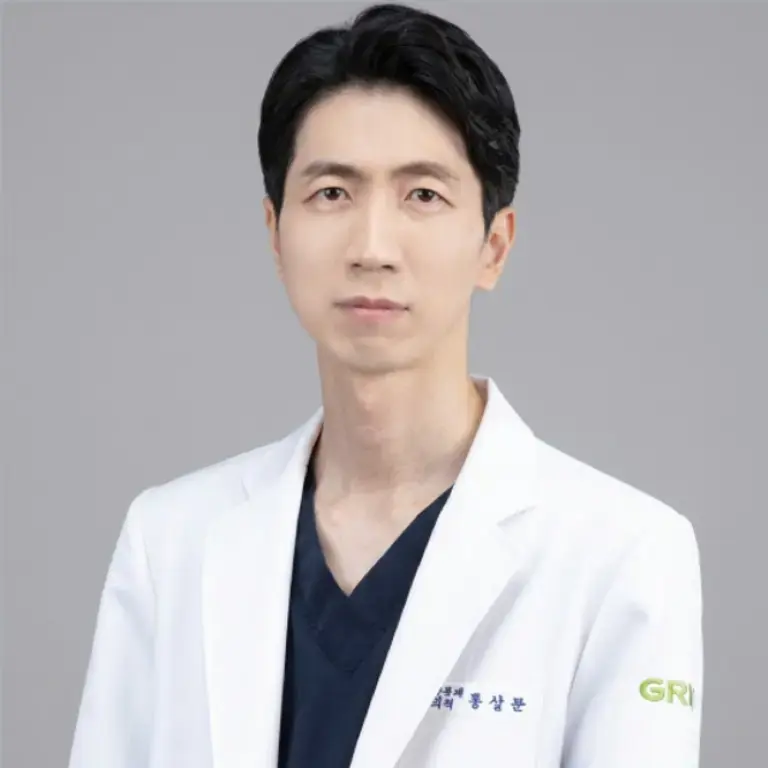
| Dr. Yong-Hae Seong Director of the Rhinoplasty Clinic | Dr. Sung-Moon Hong ENT Doctor | Dr. Sung-Hun Lee ENT Doctor | Dr. Young-Ha Lee Board-certified ENT specialist | Dr. Sun-Hong Kim ENT Doctor | Dr. Hee-Jung Park Anesthesiology Specialist GNG Hospital's Bulbous Nose Surgery is performed by a team whose combined structural expertise supports this multi-component surgical approach: - Dr. Yong-Hae Seong, Director of the Rhinoplasty Clinic, brings over 26 years of ENT practice and a background as a former Associate Professor at the Catholic University of Korea, trained at Gangnam St. Mary's Hospital.
- Dr. Sung-Moon Hong contributes more than 21 years of ENT experience, holding a Doctor of Medicine from Korea University and a former Associate Professorship there.
- Dr. Sung-Hun Lee, with over 20 years in ENT, completed dedicated rhinologist training at Seoul St. Mary's Hospital under the Catholic University of Korea system.
- Dr. Young-Ha Lee is a board-certified ENT specialist and lifetime member of the Korean Society of Facial Plastic & Reconstructive Surgery, trained at Asan Medical Center and Wonju Severance Christian Hospital.
- Dr. Sun-Hong Kim serves as a Clinical Professor across Catholic University of Korea and Seoul St. Mary's Hospital, with expertise spanning rhinoplasty, sleep surgery, and laser treatments. Supporting the surgical team, Dr. Hee-Jung Park, an Anesthesiology Specialist with 21+ years of experience, ensures patient safety and comfort throughout the procedure. This team shares a common surgical philosophy: a truly refined nose tip requires addressing skin, fat, and cartilage together — treating only one component leaves the underlying cause of bluntness unresolved. * * * ## Bulbous Nose Treatment Areas and Expected Improvements GNG Hospital's Bulbous Nose Surgery targets the specific components responsible for a wide or blunt tip appearance: - Subcutaneous Fat and Skin Thickness: Fat is removed from beneath the tip skin to slim thickness that would otherwise obscure the underlying cartilage refinement — a step conventional cartilage-only techniques typically skip, which is part of why they can leave a "pinched" rather than genuinely slim appearance.
- Tip Support Structure: A septal cartilage support strut is placed to elevate the tip, topped with an autologous cartilage graft, providing the structural foundation needed for a defined point rather than a soft, unsupported shape.
- Tip and Alar Cartilage: Blunt or spread tip cartilage is firmly cinched together with the septal support structure, and when alar cartilage is abnormally large or widened, individualized trimming or alar reduction is performed alongside the core procedure.
- Overall Frontal Definition: By addressing skin, fat, and cartilage together, GNG's approach aims for a result that reads as genuinely refined when viewed from the front — not just improved in profile. Expected improvements generally include a slimmer, more defined tip visible from multiple angles and reduced tip width. As with any surgical procedure, results and recovery vary by individual, and no specific outcome is guaranteed. * * * ## Bulbous Nose Surgery Process and Timeline |
 |
 |
 |
| --- | --- | --- |
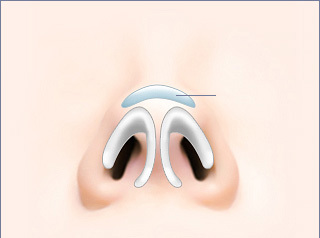
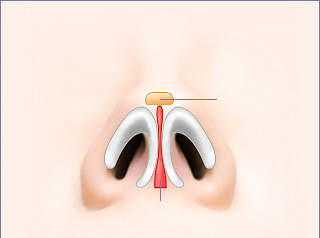
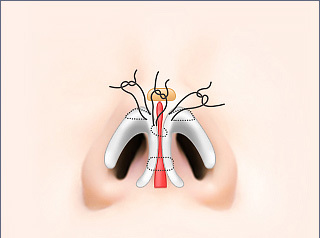
| Stage 1 | Stage 2 | Stage 3 | GNG Hospital follows its structured 3-stage process for bulbous nose correction: 1. Diagnostic Assessment: Pre-operative 3D-CT imaging and photographic measurement assess skin thickness, cartilage quantity and strength, and alar cartilage condition to determine the full surgical plan.
- Stage 1 — Subcutaneous Fat Removal: Fat beneath the tip skin is removed to slim thick skin, creating the conditions needed for visible cartilage refinement to show through.
- Stage 2 — Tip Elevation: A septal cartilage support strut is placed and topped with an autologous cartilage graft to elevate and support the tip structure.
- Stage 3 — Tip Cartilage Cinching: The blunt or spread tip cartilage is firmly bound together with the septal cartilage, creating a more defined point.
- Individualized Add-On Correction (If Needed): Based on precision exam findings, tip cartilage trimming or alar reduction may be performed alongside the core three stages.
- Immediate Aftercare: Patients receive guidance on swelling management and activity restrictions during the initial recovery period, with attention to minimizing inflammation and scarring at cartilage harvest sites.
- Follow-Up: Follow-up visits monitor tip definition and stability as swelling resolves over subsequent weeks. * * * ## Results, Safety, and Longevity of Bulbous Nose Surgery A common patient concern with bulbous nose correction is recurrence — the tip gradually re-widening or re-blunting after simple cartilage cinching. GNG Hospital's answer to this is structural: rather than relying on cinching alone, the surgical team builds a firm support strut from strong autologous cartilage (septal, rib, or similar) before cinching the tip cartilage together, so the refined shape is designed to remain stable over time rather than spreading again. Thick tip skin and fat, often assumed to be an unchangeable limitation, can also be addressed directly: GNG precisely removes unnecessary fat and soft tissue from inside the nose to thin the skin itself, aiming for a more defined line even in thick-skinned patients. Materials used for tip support and grafting are primarily autologous — septal cartilage, ear cartilage, or rib cartilage when greater volume is needed — chosen based on individual cartilage quantity and strength assessed through pre-operative testing. As with any surgical procedure, possible side effects can include swelling, bruising, infection, or asymmetry, and results and recovery vary from patient to patient; serious complications are uncommon but possible. * * * ## Why Choose GNG Hospital for Bulbous Nose Surgery?
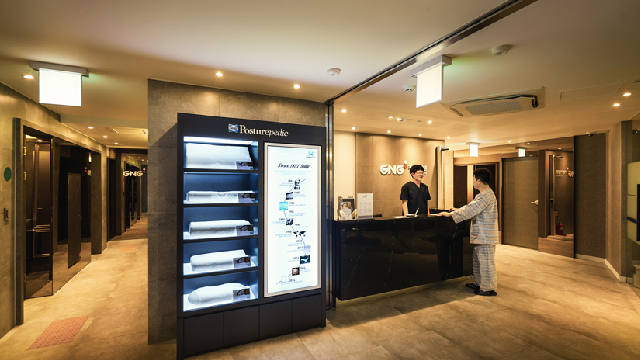 GNG Hospital is Korea's most dedicated rhinoplasty-only hospital, built on more than 15 years of singular focus on nasal medicine, with a surgical team composed primarily of board-certified ENT specialists rather than general plastic surgeons. According to 2024 HIRA (Health Insurance Review and Assessment Service) national data, GNG Hospital performed more septoplasty procedures than any other hospital-level medical institution in the country, reflecting deep structural surgical experience relevant to the cartilage support techniques used in bulbous nose correction. What distinguishes GNG's approach to Bulbous Nose Surgery is its refusal to treat tip width as a cartilage-only problem. Dr. Yong-Hae Seong brings 26+ years of ENT practice as Director of the Rhinoplasty Clinic, joined by Dr. Sung-Moon Hong, Dr. Sung-Hun Lee, Dr. Young-Ha Lee, and Dr. Sun-Hong Kim, each contributing 20+ years of focused rhinology and facial surgery experience, with memberships in organizations such as the International Rhinologic Society and the American Academy of Aesthetic Plastic Surgery. GNG's care model is fully integrated within a purpose-built 13-story facility featuring HEPA-filtered operating rooms and university-hospital-grade diagnostic equipment, meaning 3D-CT assessment, multi-stage tip surgery, and post-operative recovery all take place under one roof. The hospital also provides dedicated support for international, English-speaking patients from consultation through recovery, in a Gangnam, Seoul setting built for comfort and continuity of care. GNG Hospital's Bulbous Nose Surgery Advantages: - 3-stage technique addressing skin, fat, and cartilage together for genuine frontal-view results
- Individualized add-on procedures such as tip cartilage trimming and alar reduction based on precision exam
- Firm support-strut construction using autologous cartilage designed to prevent long-term re-widening
- Autologous graft material selection (septal, ear, or rib cartilage) based on precision pre-op testing * * * ## Real Patient Examples ### Thick-Skinned Bulbous Tip Patient, 20s After a previous cartilage-only procedure elsewhere left minimal visible change from the front, this patient underwent GNG's full 3-stage approach, including subcutaneous fat removal to slim the tip skin before cartilage elevation and cinching. ### Widened Alar Cartilage Patient, 30s Concerned about a blunt tip combined with flared nostrils, this patient received tip cartilage cinching alongside alar reduction in the same surgical session, aiming for a more proportionate lower-nose appearance. * * * ## Take the Next Step Toward a Slimmer, More Defined Nose Tip If a wide or blunt nose tip has left you feeling like cartilage-only correction won't be enough, a technique that addresses skin, fat, and cartilage together may deliver the frontal-view change you're looking for. Schedule Your Bulbous Nose Consultation Take the first step toward a slimmer, more defined nose tip. Our surgical team will conduct a detailed 3D-CT assessment of your skin thickness and cartilage structure, and walk you through a personalized 3-stage surgical plan designed for lasting definition from every angle. Prefer to speak with someone directly? Call our patient coordination team to discuss your goals and schedule your evaluation with GNG Hospital's Rhinoplasty Clinic.
Other Services
Explore additional treatments offered by our specialists.

Upturned Nose/Short Nose
Though often confused, upturned nose and short nose are distinct diagnoses that require different surgical approaches.
Learn More

Nostril Surgery
Nostril Surgery, or nostril rhinoplasty, addresses the complexes that can arise from upturned, drooping, asymmetric, or overly large nostrils.
Learn More

Rhinitis
Rhinitis is an inflammatory condition of the nasal mucosa that causes a cluster of familiar symptoms: a runny nose, sneezing, nasal congestion, and itching.
Learn More