Personalized Medical Care & Dedicated International Patient Concierge


Rhinoplasty by Type · Needs Clinic Confirmation
Arrow Nose/Long Nose
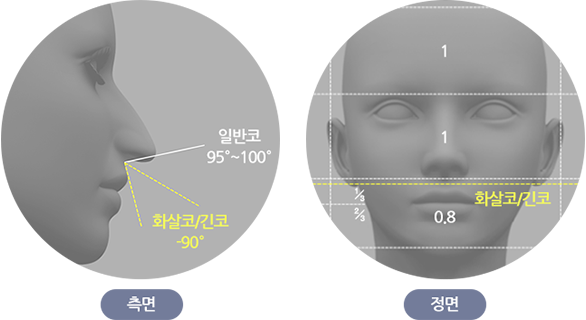
Arrow nose (also called long nose) describes a nose where the tip droops downward enough to cover the philtrum — the vertical groove between the nose and upper lip.
Schedule a ConsultationWhat Is Arrow Nose/Long Nose, and Why Does It Get Worse When Smiling?  Arrow nose (also called long nose) describes a nose where the tip droops downward enough to cover the philtrum — the vertical groove between the nose and upper lip. This drooping is typically caused by malpositioned alar (wing) cartilage, overdeveloped septal cartilage, or both, and correcting it requires lifting the drooping tip upward rather than simply adjusting bridge height or width. Diagnostically, arrow nose/long nose has a distinctive pattern: viewed from the side, the nasolabial angle is smaller than in a typical nose, and the nose appears especially longer specifically when smiling. Viewed from the front, the tip droops enough to visibly cover the philtrum. This smile-triggered worsening is a key clue to the underlying cause — the root of tip drooping often lies in septal cartilage that's excessively long, or a strong depressor septi nasi muscle, the muscle that actively pulls the tip downward during facial expressions. Age-related weakening of tip support structures can also contribute to a nose appearing to lengthen over time. * * * ## Who Needs Arrow Nose/Long Nose Surgery? Arrow Nose/Long Nose Surgery is suited to patients whose tip droops noticeably, particularly during facial expression: - Adults in their 20s through 60s whose nasal tip visibly droops enough to cover the philtrum
- Patients who notice their nose looks especially long when smiling, more than when their face is at rest
- Individuals with large, drooping alar cartilage contributing to the downward tip position
- Patients with overdeveloped septal cartilage identified as the structural cause of tip drooping
- Those concerned that their drooping tip contributes to an aged or tired appearance
- Patients who also have a crooked nose, hump nose, or nasal obstruction and want all conditions addressed in one surgical plan
- Individuals interested in understanding the role of the depressor septi nasi muscle in their tip position, especially during expression
- Patients concerned about recurrence of tip drooping after a previous procedure elsewhere * * * ## Meet the Specialists Behind GNG Hospital's Arrow Nose/Long Nose Surgery |
 |
 |
 |
 |
 |
| --- | --- | --- | --- | --- |
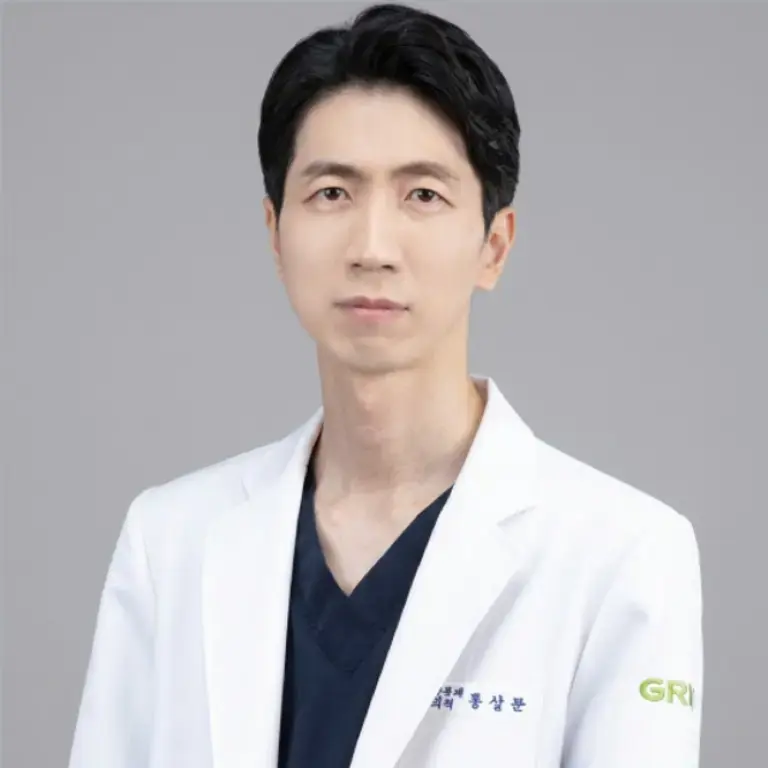
| Dr. Yong-Hae Seong Director of the Rhinoplasty Clinic | Dr. Sung-Moon Hong ENT Doctor | Dr. Sung-Hun Lee ENT Doctor | Dr. Young-Ha Lee Board-certified ENT specialist | Dr. Sun-Hong Kim ENT Doctor | Dr. Hee-Jung Park Anesthesiology Specialist GNG Hospital's Arrow Nose/Long Nose Surgery is performed by a team whose structural and dynamic-anatomy expertise supports this technically demanding correction: - Dr. Yong-Hae Seong, Director of the Rhinoplasty Clinic, brings over 26 years of ENT practice and a background as a former Associate Professor at the Catholic University of Korea, trained at Gangnam St. Mary's Hospital.
- Dr. Sung-Moon Hong contributes more than 21 years of ENT experience, holding a Doctor of Medicine from Korea University and a former Associate Professorship there.
- Dr. Sung-Hun Lee, with over 20 years in ENT, completed dedicated rhinologist training at Seoul St. Mary's Hospital under the Catholic University of Korea system.
- Dr. Young-Ha Lee is a board-certified ENT specialist and lifetime member of the Korean Society of Facial Plastic & Reconstructive Surgery, trained at Asan Medical Center and Wonju Severance Christian Hospital.
- Dr. Sun-Hong Kim serves as a Clinical Professor across Catholic University of Korea and Seoul St. Mary's Hospital, with expertise spanning rhinoplasty, sleep surgery, and laser treatments. Supporting the surgical team, Dr. Hee-Jung Park, an Anesthesiology Specialist with 21+ years of experience, ensures patient safety and comfort throughout the procedure. This team shares a common surgical philosophy: correcting a drooping tip means accounting for how the nose moves during expression, not just how it looks at rest — a distinction that determines whether results hold up long-term. * * * ## Arrow Nose/Long Nose Treatment Areas and Expected Improvements GNG Hospital's Arrow Nose/Long Nose Surgery addresses two primary structural causes, matched to a specific technique each: - Alar Cartilage (When Large and Drooping): When the alar cartilage itself is large and positioned too low, it's excised and rotated or repositioned upward, directly lifting the drooping tip into a more balanced position.
- Septal Cartilage (When Overdeveloped): When the septal cartilage is overdeveloped and contributing to the excess length, the drooping portion is removed to correct the arrow/long nose appearance at its structural source.
- Nasal Tip Support Structure: After correcting via alar repositioning or septal reshaping, autologous cartilage is grafted as a support strut at the tip specifically to prevent recurrence and create a well-defined, refined tip.
- Depressor Septi Nasi Muscle: This muscle, responsible for pulling the tip downward during smiling and other expressions, is appropriately excised or weakened during surgery — a step considered essential to prevent the tip from drooping again specifically when making facial expressions. Expected improvements generally include a shorter, more lifted tip position and a softer overall facial impression, including when smiling. As with any surgical procedure, results and recovery vary by individual, and no specific outcome is guaranteed. * * * ## Arrow Nose/Long Nose Surgery Process and Timeline
 GNG Hospital follows a cause-matched, dynamically-aware surgical process: 1. Precision Diagnostic Evaluation: 3D-CT imaging and clinical assessment determine whether alar cartilage position, septal cartilage development, or the depressor septi nasi muscle is the primary contributor to tip drooping, along with checking for co-occurring crooked nose, hump nose, or nasal obstruction.
- Cause-Matched Surgical Planning: Based on diagnostic findings, the surgical team selects alar cartilage repositioning, septal reshaping, or a combination, along with planning for muscle management.
- Cartilage Correction Surgery: Alar cartilage is excised and repositioned upward, and/or excess drooping septal cartilage is removed, correcting the structural cause of the tip's downward position.
- Depressor Muscle Management: The depressor septi nasi muscle is appropriately excised or weakened during the same procedure, addressing the dynamic component of tip drooping seen during smiling and expression.
- Tip Support Strut Grafting: Autologous cartilage is grafted as a support strut at the tip to prevent recurrence and create a well-defined, refined result.
- Combined Correction (If Needed): When crooked nose, hump nose, nasal valve stenosis, or deviated septum is also present, these are corrected in the same surgical session based on comprehensive pre-op 3D-CT analysis.
- Immediate Aftercare: Patients receive guidance on swelling management and activity restrictions during the initial recovery period.
- Follow-Up: Follow-up visits monitor tip position and stability, including how the tip behaves during facial expression, as swelling resolves over subsequent weeks. * * * ## Results, Safety, and Longevity of Arrow Nose/Long Nose Surgery A defining safety and durability consideration in arrow nose/long nose surgery is accounting for the nose's dynamic movement, not just its static position. If the depressor septi nasi muscle pulling the tip downward isn't appropriately excised or weakened during surgery, the tip will tend to droop again after surgery specifically when smiling or making expressions — which is why GNG considers this a high-difficulty technique requiring careful attention to functional anatomy, not simply repositioning cartilage. The tip support strut, grafted using the patient's own autologous cartilage after alar repositioning and septal reshaping, is specifically intended to prevent recurrence and maintain a well-defined tip shape over time. As with any surgical procedure, possible side effects can include swelling, bruising, infection, or asymmetry, and results and recovery vary from patient to patient; serious complications are uncommon but possible. Because arrow/long nose often co-occurs with other structural conditions, GNG's pre-operative 3D-CT analysis is designed to catch and address all contributing issues together rather than treating tip drooping in isolation. * * * ## Why Choose GNG Hospital for Arrow Nose/Long Nose Surgery?
 GNG Hospital is Korea's most dedicated rhinoplasty-only hospital, built on more than 15 years of singular focus on nasal medicine, with a surgical team composed primarily of board-certified ENT specialists rather than general plastic surgeons. According to 2024 HIRA (Health Insurance Review and Assessment Service) national data, GNG Hospital performed more septoplasty procedures than any other hospital-level medical institution in the country, reflecting broad structural surgical experience relevant to the cartilage and muscle techniques used in arrow/long nose correction. What distinguishes GNG's approach to Arrow Nose/Long Nose Surgery is its attention to the nose's dynamic behavior — accounting for how the depressor septi nasi muscle affects tip position during expression, not just at rest. Dr. Yong-Hae Seong brings 26+ years of ENT practice as Director of the Rhinoplasty Clinic, joined by Dr. Sung-Moon Hong, Dr. Sung-Hun Lee, Dr. Young-Ha Lee, and Dr. Sun-Hong Kim, each contributing 20+ years of focused rhinology and facial surgery experience, with memberships in organizations such as the International Rhinologic Society and the American Academy of Aesthetic Plastic Surgery. GNG's care model is fully integrated within a purpose-built 13-story facility featuring HEPA-filtered operating rooms and university-hospital-grade diagnostic equipment, meaning 3D-CT diagnosis, cause-matched surgery, and post-operative recovery all take place under one roof. The hospital also provides dedicated support for international, English-speaking patients from consultation through recovery, in a Gangnam, Seoul setting built for comfort and continuity of care. GNG Hospital's Arrow Nose/Long Nose Surgery Advantages: - Cause-matched technique distinguishing alar cartilage repositioning from septal reshaping based on precise diagnosis
- Depressor septi nasi muscle management specifically to prevent expression-triggered recurrence
- Autologous tip support strut grafting for recurrence prevention and refined tip definition
- Comprehensive 3D-CT analysis identifying co-occurring crooked nose, hump nose, or nasal obstruction for simultaneous correction * * * ## Real Patient Examples ### Drooping Tip Patient, 30s This patient noticed their nose looked noticeably longer whenever they smiled, with the tip covering their philtrum. Diagnostic evaluation at GNG Hospital identified large, drooping alar cartilage as the primary cause, and the surgical team performed alar cartilage repositioning along with depressor muscle management and tip strut grafting. ### Combined Arrow Nose and Hump Nose Patient, 40s This patient had both a drooping tip and a mild hump, with mild nasal congestion. GNG's pre-op 3D-CT analysis identified overdeveloped septal cartilage as the cause of the drooping tip alongside the hump, and the surgical team corrected both conditions along with nasal valve reconstruction in a single session. * * * ## Take the Next Step Toward a More Balanced Tip Position If your nose seems to droop further and your face looks longer when you smile, addressing both the cartilage structure and the muscle pulling your tip down may offer a more lasting solution than cartilage correction alone. Schedule Your Arrow Nose/Long Nose Consultation Take the first step toward a tip position that holds up through your natural expressions. Our surgical team will conduct a detailed 3D-CT evaluation to identify whether alar cartilage, septal cartilage, or the depressor septi nasi muscle is driving your tip's droop, and walk you through a personalized surgical plan designed to prevent recurrence. Prefer to speak with someone directly? Call our patient coordination team to discuss your goals and schedule your evaluation with GNG Hospital's Rhinoplasty Clinic.
Other Services
Explore additional treatments offered by our specialists.

Upturned Nose/Short Nose
Though often confused, upturned nose and short nose are distinct diagnoses that require different surgical approaches.
Learn More

Nostril Surgery
Nostril Surgery, or nostril rhinoplasty, addresses the complexes that can arise from upturned, drooping, asymmetric, or overly large nostrils.
Learn More

Rhinitis
Rhinitis is an inflammatory condition of the nasal mucosa that causes a cluster of familiar symptoms: a runny nose, sneezing, nasal congestion, and itching.
Learn More